
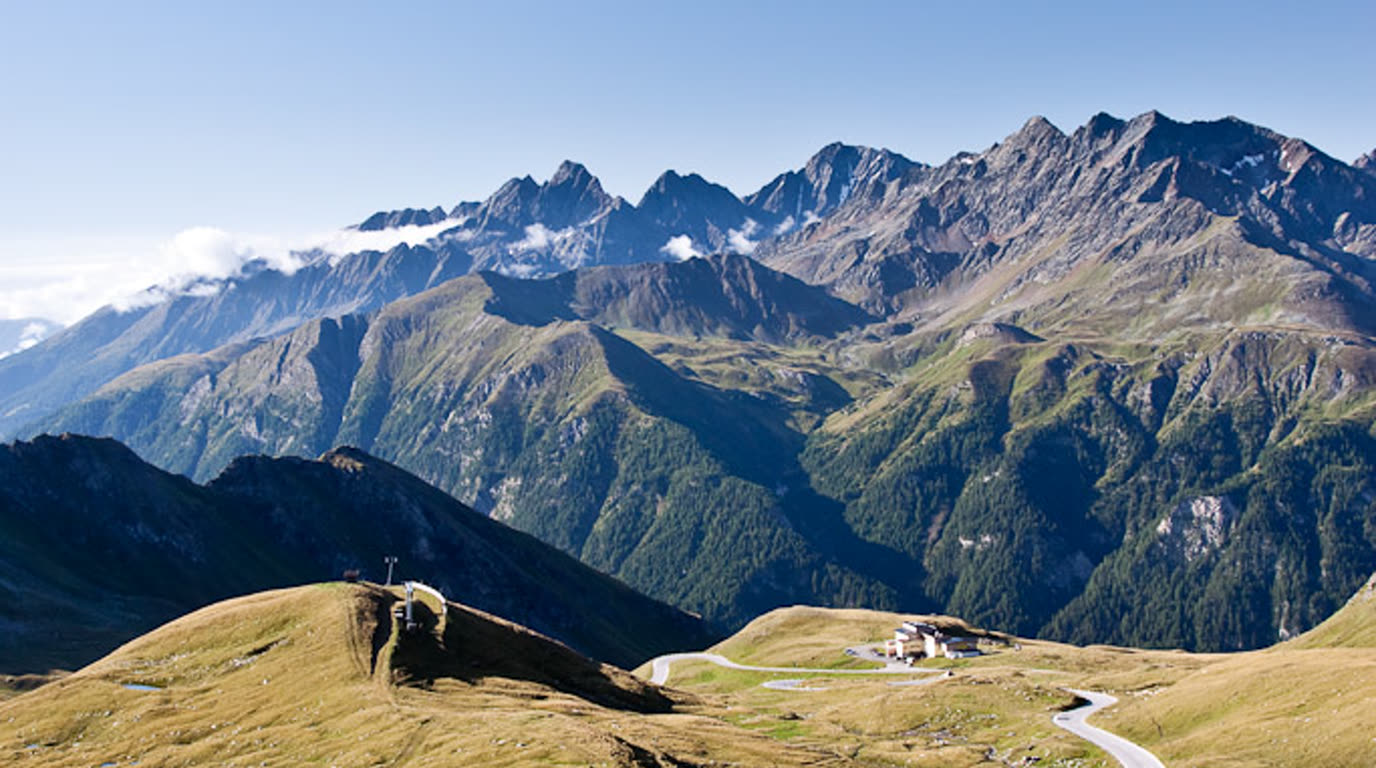
Hohe Tauern and the Grossglockner
Six days in the Hohe Tauern: the Grossglockner High Alpine Road, the Pasterze glacier, the Krimml Waterfalls and a lakeside base in Zell am See. The rhythm is simple: two transfer days out and back, one big mountain day and three calm ones by the lake — in the Pinzgau valley a single campsite covers the whole stay. Save the mountain day for the morning, because the road closes for the night and carries a toll of its own that belongs in your budget. The safest window for a motorhome is June to September, when the lifts up to the reservoirs above Kaprun are running as well.
Itinerary
Transfer to the Pinzgau valley
The first day is pure driving. From Prague the most comfortable route runs via Linz and Salzburg into the Salzach valley; beyond Bischofshofen the landscape closes into a valley and the first glaciated peaks appear. Set up your base around Zell am See or Bruck — every destination on this trip is within easy reach from here.
Zell am See and the Zeller See
After the long transfer, a day without much driving is welcome. A flat loop trail runs right around the Zeller See and even smaller children manage it, and in summer the water really is warm enough for swimming. In the afternoon you can take the cable car up to the Schmittenhöhe, which looks out over the whole Hohe Tauern ridge and the tip of the Grossglockner.
Kaprun and the high-alpine reservoirs
The Wasserfallboden and Mooserboden reservoirs above Kaprun are striking, but you cannot reach them in your own vehicle. You stop at the Kesselfall Alpenhaus and continue upwards by shuttle bus and the Lärchwand inclined lift. The route usually opens only at the end of May and closes in the middle of October, so check the day before that it is running — at the edges of the season this stop simply drops out.
The Krimml Waterfalls
The falls at Krimml are tackled on a trail that climbs alongside three tiers, and at every one of them the spray reliably gets you. Up and back takes roughly three hours and the reward is a view into the whole cascading gorge. There is an entrance fee for the trail, an adult pays around nine euros and a child from six to fifteen half of that; it is usually open from the beginning of May to the end of October.
The Grossglockner High Alpine Road
The main day of the trip. From the northern side you climb from Fusch over the Fuscher Törl, where the view of the entire ridge opens up for the first time, and a side road takes you to the Kaiser-Franz-Josefs-Höhe opposite the tongue of the Pasterze glacier. The road has an official night driving ban — in high season it is open roughly from half past five in the morning until nine in the evening, and the last entry is three quarters of an hour before closing, so set off early in the morning and do not stay up there until dusk. On the southern side lies Heiligenblut with its church, whose tower frames the Grossglockner; if you want to stay beneath the mountain, spend the night in the village, otherwise return north on the same road.
The journey home
The last day belongs to the drive back. If you set off early in the morning you are home in the afternoon and still have time to clear out the vehicle. If you are in no hurry, break the return with a stop in Salzburg or at the Mondsee.
Practical motorhome information
Up to 3.5 t (most motorhomes) Austria requires a category B motorway vignette — digital or a sticker. ASFINAG rates for 2026: one day €9.60, ten days €12.80, two months €32.00, a year €106.80. Above 3.5 t the vignette does not apply; those vehicles run on a GO-Box and distance-based tolling (the GO-Maut system). The Grossglockner High Alpine Road has a toll of its own, outside the vignette: in 2026 a day ticket for a car or a motorhome comes to €46.50 and for a motorcycle €36.50; vehicles over 3.5 t fall into a higher category, so check that rate at the toll booth or at grossglockner.at. The ticket is valid for the given day, so you can drive back through on it as well. If you add the Felbertauern tunnel or the Gerlos Alpine Road to your route, each of those sections carries its own separate charge.
Seecamp Zell am See, Thumersbacherstraße 34, Zell am See — right on the Zeller See, 130 pitches, open all year round · Sportcamp Woferlgut, Krössenbach 40, Bruck an der Großglocknerstraße — a few minutes from the northern approach to the high alpine road, open all year round · Nationalpark Camping Grossglockner (Almcasino), Hadergasse 11, Heiligenblut am Großglockner — the southern side of the road below the Grossglockner, open all year round
The Hohe Tauern is a national park and wild camping outside campsites will not pass here — count on sleeping down in the valley. The car parks at the Krimml Waterfalls and at the Kesselfall Alpenhaus above Kaprun are paid and intended for daytime parking, not for overnight stays. In Zell am See and Kaprun the campsites tend to be full in high season, so book your pitch in advance.
The most reliable way to refill water and empty your tanks is at the campsite where you sleep — Seecamp Zell am See has water and waste connections at its comfort pitches in summer. Do not look for any service point on the high alpine road itself; up there you will find only toilets and refreshments at the viewpoints. So before you head up the Grossglockner, set off with a full water tank and an empty waste tank — the day up there is a long one.
Stops along the route
You may also like
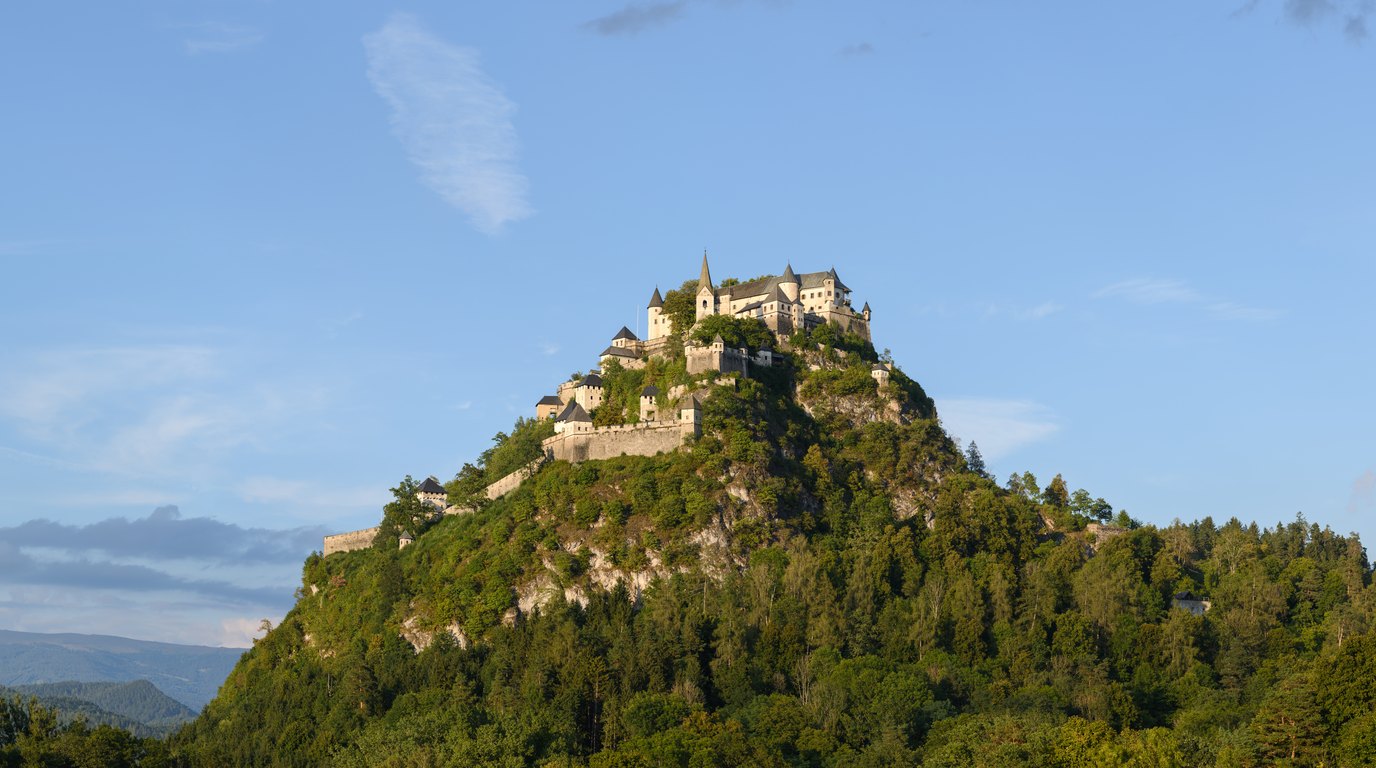
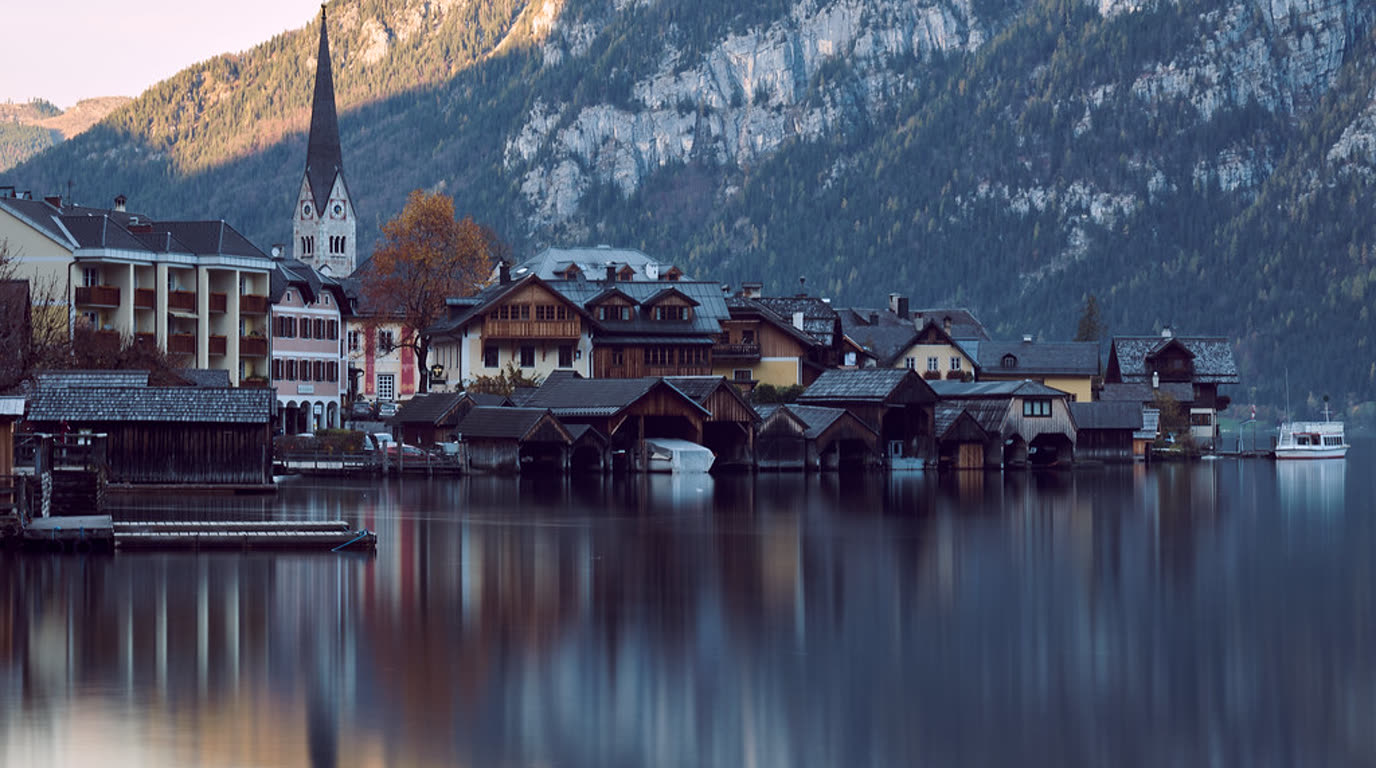
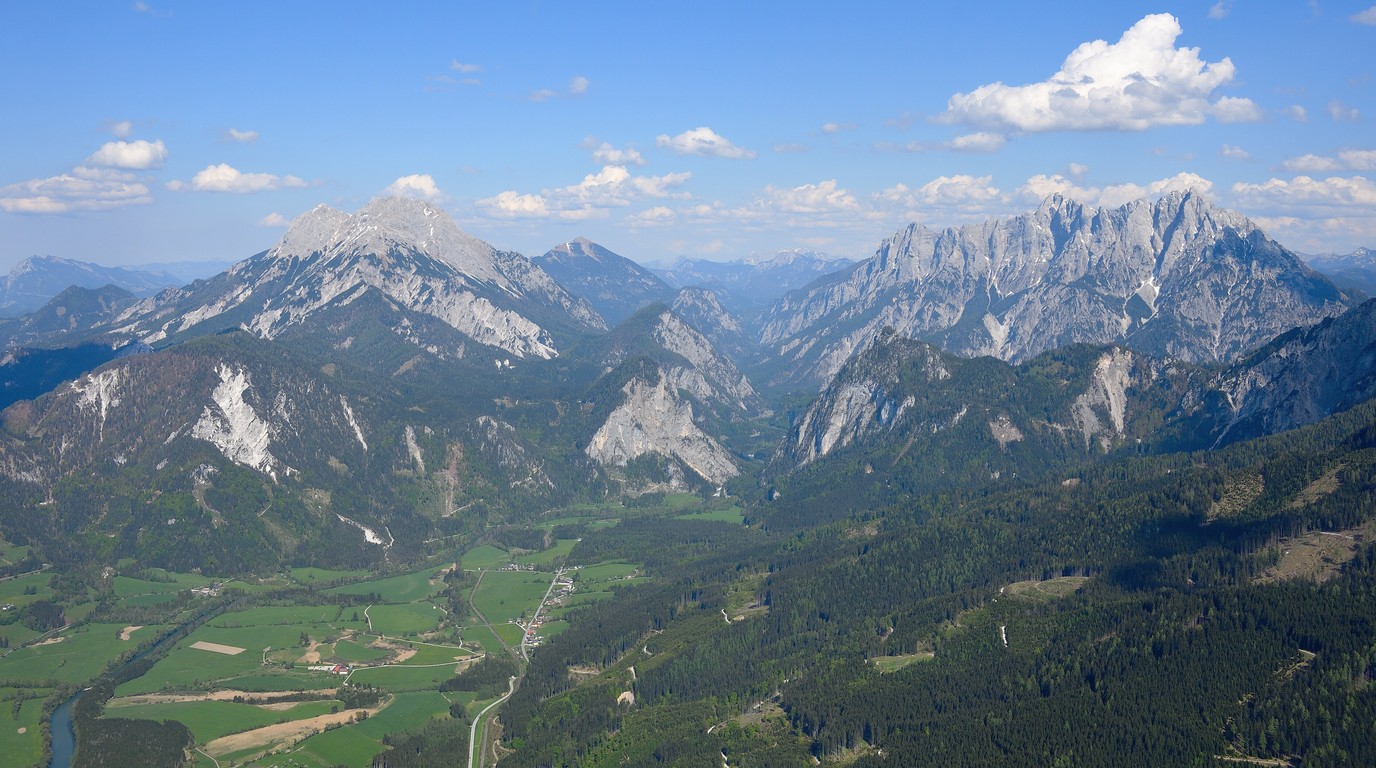
The map and GPX contain separate planning waypoints, not a driving route. Follow the itinerary for access to attractions and campsites.
Adria Compact
The Grossglockner road has thirty-six sharp hairpin bends, and on top of that there are the narrow lanes of Heiligenblut — the Adria Compact is a low-profile motorhome that stays under seven metres in length, so you take the switchbacks without any nerves and you will find parking at the falls in Krimml too. At the same time it carries supplies for a whole week, so you can keep a fixed base down in the valley and head up to the mountains travelling light.
Get road trip ideas by email
Leave us your email and we will send motorhome inspiration and stock updates.
Adria Karavany · https://www.adriakaravany.cz/en/vylety/vysoke-taury-a-grossglockner/