
Lower Silesia and the Kłodzko Valley
Silesian castles, the rock maze of the Stołowe Mountains and Śnieżka from the Polish side — six days through Lower Silesia and Kłodzko by motorhome. The border sits just beyond Náchod, so the first stop in the spa town of Kudowa-Zdrój still fits into the day you leave home. After that you only move in short hops between sandstone rocks, the fortress in Kłodzko, Książ Castle and Wrocław, for which you should set aside a whole day. The last morning belongs to the chairlift up to Kopa and the ridge walk to Śnieżka, and in the afternoon you head home.
Itinerary
Through Náchod to the spa town of Kudowa-Zdrój
From Prague you drive via Hradec Králové and Náchod to a border crossing that lies practically in the middle of a built-up area — Poland simply begins, with no fuss and no queue. In Kudowa-Zdrój a spa park awaits you, with a pijalnia serving mineral water and a level promenade that even small children manage after a day in the car. If you have the stomach for it, head to the Czermna district and the Chapel of Skulls (Kaplica Czaszek), whose walls and vault are stacked with the bones of victims of the Thirty Years' War and the Silesian Wars. The rest of the afternoon goes on withdrawing złoty and shopping for the days ahead.
The Stołowe Mountains: Szczeliniec Wielki and Błędne Skały
From Karłów a stone stairway climbs to Szczeliniec Wielki and ends on a rock plateau full of viewpoints, clefts and towers — a full day out that even schoolchildren enjoy. The road from Karłów to Błędne Skały is narrow, one-way and in places cut straight through the rock; do not take a motorhome onto it, leave the vehicle in Karłów and walk or use the shuttle bus. The national park charges admission and Błędne Skały is entered in timed slots with limited capacity, so book ahead in summer and check the current conditions on the park's website in advance. The maze itself is then simply slow walking between sandstone blocks as tall as a house.
Kłodzko Fortress and the road to Wałbrzych
Kłodzko is the historic heart of the whole region and the fortress above the town covers more than thirty hectares — visitors can walk part of the underground countermine tunnels, which are cold and damp, so bring a warm layer and sturdy shoes. In town, the Gothic bridge lined with statues and the old square below the fortress are both worth a stop. In the afternoon you can turn off to Polanica-Zdrój for a coffee in the spa park and then continue up the valley northwards to Wałbrzych.
Książ Castle and the Church of Peace in Świdnica
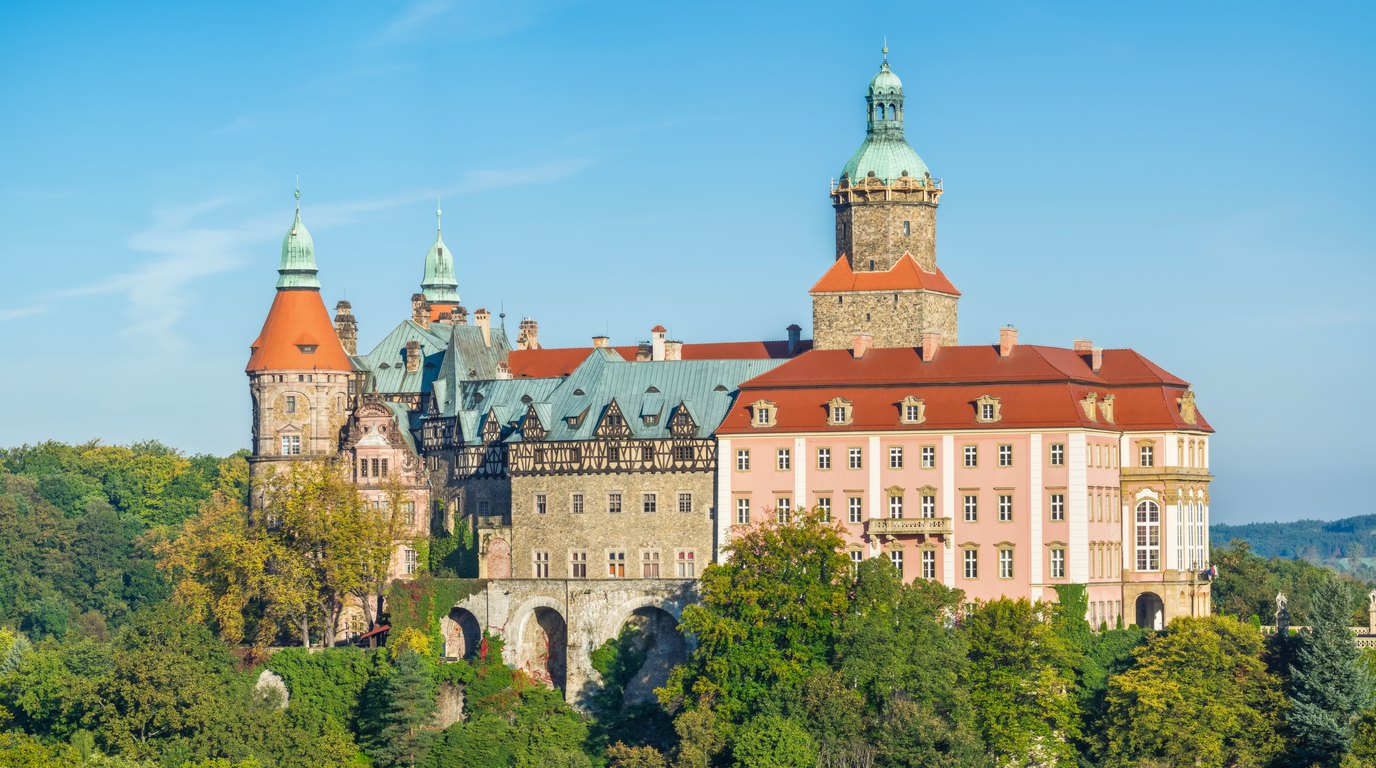
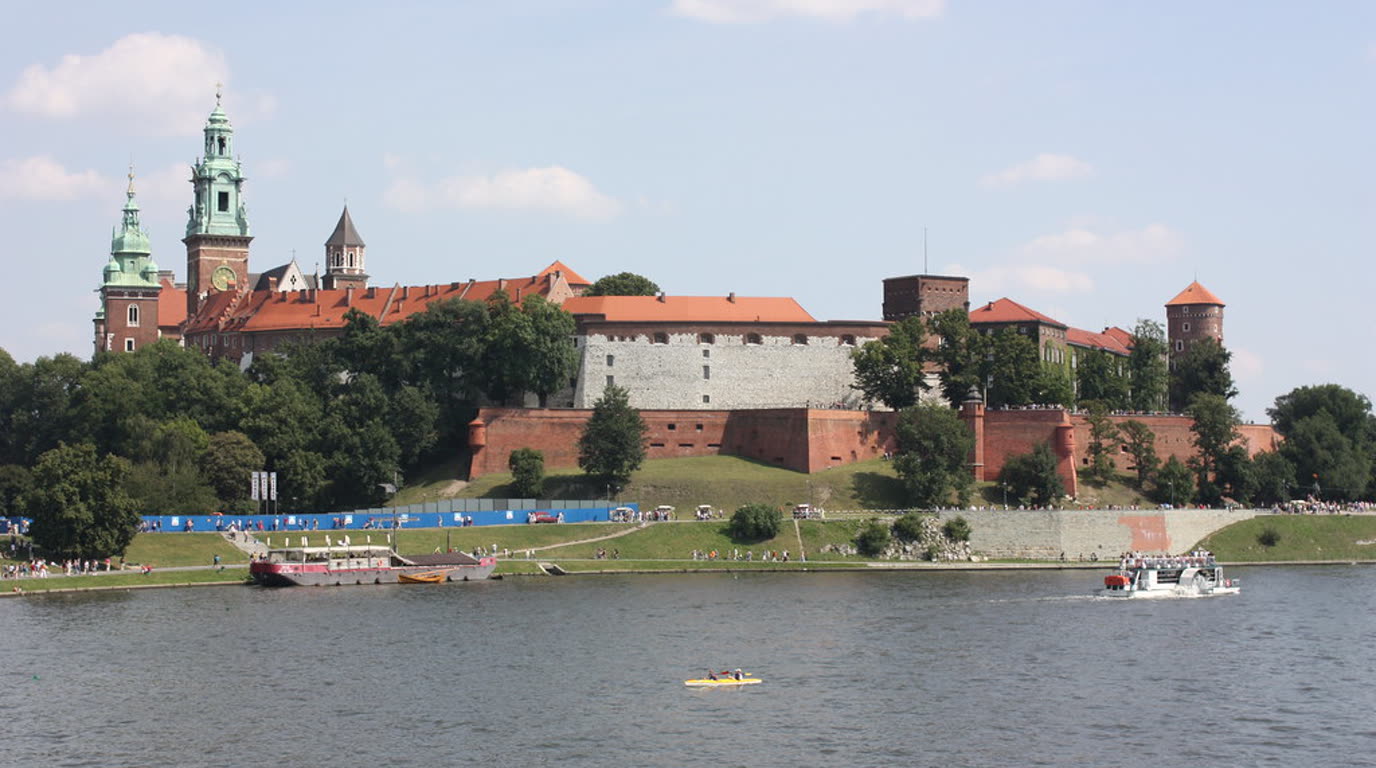
After Malbork and Wawel, Książ is the third largest castle in Poland and has more than four hundred rooms; the visit takes in the French terraced gardens, a Japanese garden and a palm house. Below the castle you can descend into an underground route dug during the Second World War as part of Project Riese. In the afternoon you move on to Świdnica and its Church of Peace, built in 1656–1657 — a timber-framed structure of wood, clay and straw, the largest wooden Baroque church in Europe and a UNESCO site since 2001. If you have the time, you can add the second Church of Peace in Jawor.
A full day in Wrocław
Wrocław deserves a whole day: the Rynek with its Renaissance town hall, the cathedral island of Ostrów Tumski and Centennial Hall, a modernist reinforced concrete structure from 1913 listed by UNESCO. The motorhome stays at the campsite and you ride into the centre by tram or cycle in along the Oder embankment. Children will happily hunt for the bronze dwarfs, several hundred of which are scattered across pavements and railings. The early evening belongs to the transfer to the foothills of the Giant Mountains (Krkonoše), so that on your last morning the peaks are within reach.
Chairlift to Kopa, Śnieżka and the way home
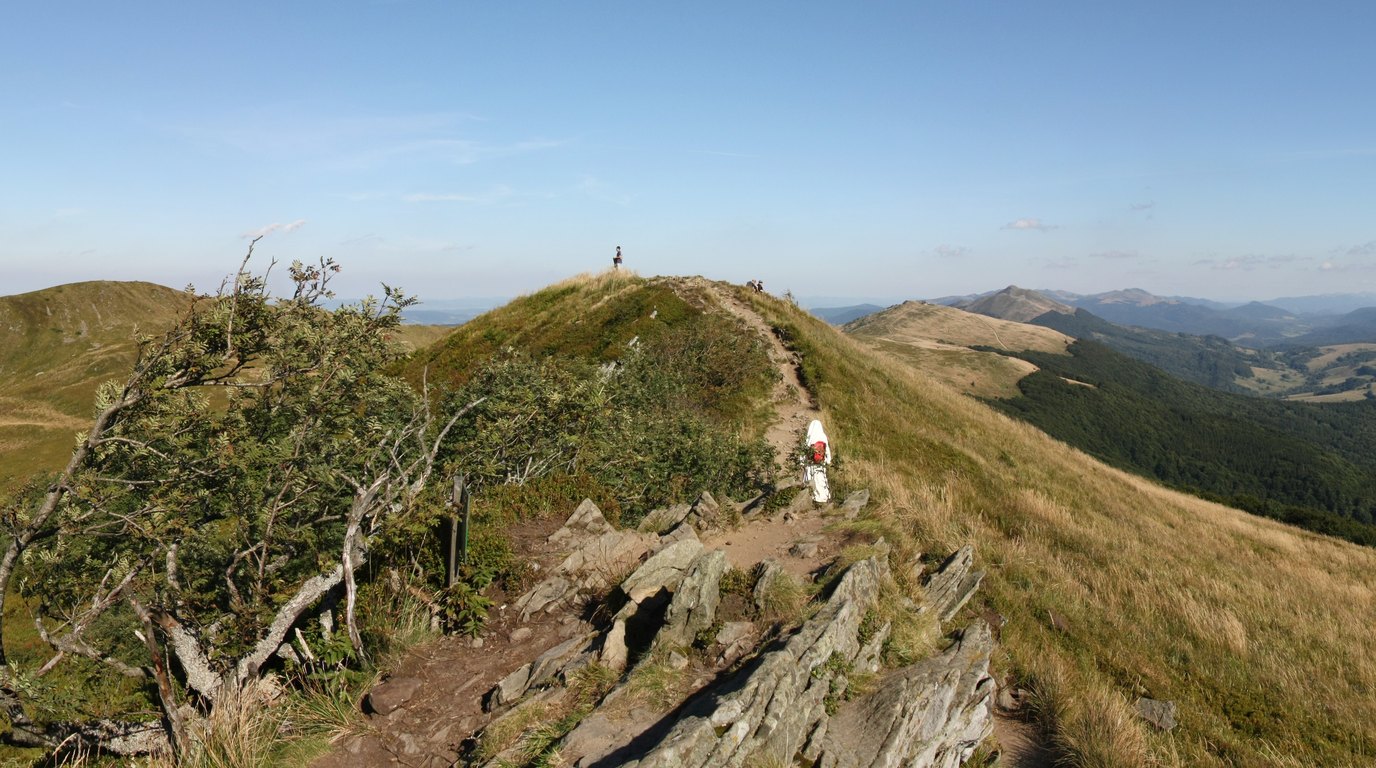
The Zbyszek chairlift carries you from Biały Jar in Karpacz up to Kopa, but it will not take you to the summit — from the top station you continue on foot along the Silesian Road over the Silesian Pass, and you should allow roughly an hour of walking along the ridge. At the top you stand exactly on the border, so you look down on both sides of the range at once. Karpacz has narrow, steep streets and car parks that overflow in season, so park down by the lower lift station. In the afternoon you return via Kowary and Lubawka to the Královec crossing and home on the motorway.
Practical motorhome information
Up to 3.5 t (most of the motorhomes we sell): Poland has no motorway vignettes and light vehicles pay nothing on the state-run motorway sections — tolls for them on the state sections of the A2 and A4 were abolished in 2023. The concession sections A1 Rusocin–Nowa Wieś, A2 Świecko–Konin and A4 Katowice–Kraków remain paid, but this route uses none of them. Over 3.5 t: registration in the e-TOLL system is mandatory and you pay by the kilometre driven on the tolled network, expressways included — without an active device and a prepaid account you risk a fine. Add to your budget the admission to Park Narodowy Gór Stołowych for both Szczeliniec Wielki and Błędne Skały, the chairlift fare in Karpacz and the admission to Książ Castle and Kłodzko Fortress; the car parks at the park entrances usually charge a fee, so keep some cash on you.
Góry Stołowe Camp, Kolonia Leśna 12D, Radków — pitches with electricity, water and waste water connections, open all year round · Camper Park Radków, Kolonia Leśna 3a, Radków — fifty marked-out pitches for motorhomes and caravans right below the Stołowe Mountains · Camper Park Aqua Zdrój, Ratuszowa 6, Wałbrzych — guarded year-round pitches with electricity, drinking water and grey and black water disposal, a short drive from Książ Castle · Camper Park Stadion Wrocław, al. Śląska 1, Wrocław — open all year with a service point and a tram into the centre, closed on match and major event days · Camping Wrocław, Starodworska 11a, Wrocław — takes motorhomes, season from 1 April to 30 September · Camp66, Widokowa 9, Ściegny near Karpacz — a meadow campsite with a view of the Krkonoše ridge, open all year, the base for Karpacz
Camping outside designated places is prohibited in Poland and in the national parks it is strictly enforced, so do not plan a night in the car park below the Stołowe Mountains. Booking pays off above all in Radków and around Karpacz in the main season and over long weekends, when both areas fill up with Polish families. In Wrocław, count on the campsite lying outside the centre, with public transport taking you into town.
The most dependable service is on the pitches at Góry Stołowe Camp in Kolonia Leśna near Radków — the water and waste water connections are right at the pitch, so you can deal with the tanks on the night after your day in the rocks. Heading north, Camper Park Aqua Zdrój in Wałbrzych has its own service point for drinking water and for emptying the grey and black tanks. In Wrocław the year-round Camper Park at the stadium does the same; Camping Wrocław on Starodworska street only runs from April to the end of September. Around Karpacz the service points are tied to the campsites, so do not look for separate public disposal points there. The mineral water from the spa pump rooms in Kudowa and Polanica is for drinking, not for your tank.
Stops along the route
You may also like
The map and GPX contain separate planning waypoints, not a driving route. Follow the itinerary for access to attractions and campsites.
Adria Compact
Kłodzko is driven on narrow back roads, and in Karłów, Świdnica and Karpacz you park in full car parks where a longer vehicle only ends up reversing — the low-profile Adria Compact is one of the shorter motorhomes on offer and parks where a long A-class would struggle. For six days with children it still gives you a full bathroom and kitchen, so you are not tied to the service point at the campsite.
Get road trip ideas by email
Leave us your email and we will send motorhome inspiration and stock updates.
Adria Karavany · https://www.adriakaravany.cz/en/vylety/dolni-slezsko-a-kladsko/