
Masuria and Podlasie
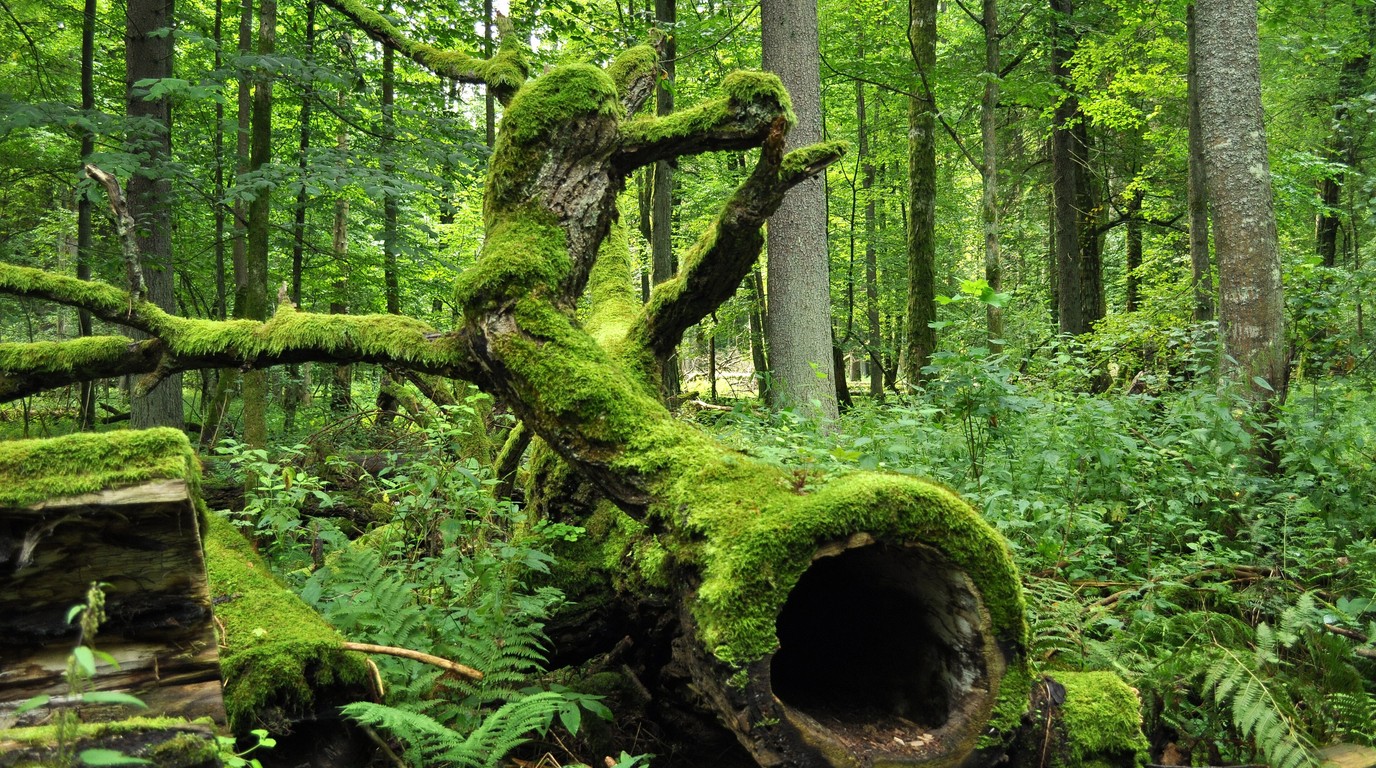
Masurian lakes, boats that travel overland on the Elbląg Canal and bison in Białowieża Forest: ten days in Poland's wildest corner. The route runs through Warmia to the Great Masurian Lakes, then on to the Biebrza wetlands of Podlasie, and ends at the far eastern edge of Poland on the boundary of the forest. It is a holiday for anyone who does not want to rush it — the drive out and the drive back take two days each, and the remaining six belong to water, birds and woodland. The best time to come is May to September: spring belongs to birdsong and mosquitoes, late summer to calmer water and emptier campsites.
Itinerary
From Czechia to Greater Poland
The first day is pure driving and there is no point pretending otherwise. The sensible thing is to stop for the night somewhere in Greater Poland or near Toruń and leave the rest of the route for the morning. Toruń is easy to walk in the evening and its Gothic old town is exactly the leg-stretch you need after a whole day behind the wheel.
The Elbląg Canal and the Buczyniec inclined plane
In the morning you carry on north to the Elbląg Canal, an engineering monument where boats do not overcome the difference in level inside locks but ride overland on carriages pulled along rails. You can watch the Buczyniec inclined plane from the bank as well, and the whole mechanism is beautifully visible while it works. The night can be spent in Elbląg, an easy starting point for the next day's cruise.
A cruise on the canal and Święta Lipka
Alongside the full-day Ostróda–Elbląg route, the operator Żegluga Ostródzko-Elbląska also offers shorter options that cover precisely the stretch with the inclined planes; the timetable changes every season, so check it in advance. For this day pick one of the shorter morning departures — the full-day route, with the journey back to the vehicle, swallows the whole day and leaves no time for anything else. In the afternoon you cross into Warmia to Święta Lipka, where the pilgrimage basilica gives demonstrations of its Baroque organ with moving figures several times a day in the summer season. The evening ends on the shore of Lake Niegocin near Giżycko.
Giżycko, Niegocin and the Wolf's Lair
Giżycko is the traffic crossroads of the Great Masurian Lakes: it has a swing bridge over the Łuczański Canal and the massive Prussian fortress of Boyen, which children are happy to walk through. The afternoon offers a detour to Gierłoż and the ruins of the Wolf's Lair, Adolf Hitler's headquarters, blown up by the retreating Germans at the end of the war. It is only a short hop back to the lake, so there is still time for a swim in the evening.
Mikołajki and Lake Śniardwy
Mikołajki is the harbour heart of Masuria and the best base for Śniardwy, the largest lake in Poland. A boat trip across the open water is worth it, but Śniardwy is unsheltered and the waves get up quickly, so go by the forecast rather than by mood. The early evening in the marina belongs to fish on the plate and to children with somewhere to run.
The Krutynia and the Pisz Forest
The river Krutynia is one of the prettiest kayaking routes in Poland and the rental places along it also offer short family sections, so you do not have to sign up for a whole day on the water. If you would rather walk, the Pisz Forest has waymarked loops through the woods and around the lakes. This is the last slow day before the route swings south-east.
Moving on to the Biebrza
From Masuria you cross into Podlasie and Biebrza National Park, the largest in Poland and at the same time the largest continuous wetland complex in Central Europe. You walk along boardwalks and out to the viewing towers, from which, with a little luck, you may spot elk. One essential warning for May and June: without repellent and mosquito screens in the windows this place is misery, because there really are a great many mosquitoes.
Białowieża Forest and the bison
Europe's last lowland primeval forest is visited under discipline: the strict reserve may be entered only with a licensed guide, who has to be arranged in advance, and the group may be led along the marked trail only. Nobody can order up an encounter with a bison in the wild, which is why most visitors head for the Rezerwat Pokazowy Żubrów, where the animals are kept in enclosures and even small children get to see them. The forest borders Belarus and access to the trails changes from time to time, so check the park's current visitor notice before you leave.
Back through Podlasie and Greater Poland
The return from Podlasie is just as long as the way out, so it splits into two days with a night somewhere around Łódź or Wrocław. That leaves an easy drive home on the morning of the final day. If you have time to spare, you can shorten the first day of the return with a stop in Tykocin and its Baroque church and synagogue.
Practical motorhome information
Up to 3.5 t: Poland has no vignette and neither state motorways nor expressways are charged for this category. A toll remains only on the concession sections A1 Rusocin–Nowa Wieś, A2 Konin–Świecko and A4 Katowice–Kraków; on the route to Masuria they can be avoided, but anyone adding a detour to Gdańsk will pay on the A1 even in a light vehicle. Over 3.5 t: registration in the e-TOLL system is compulsory (mobile app or on-board unit), the rate varies with the road class and the vehicle's emission class and can be worked out in the calculator at etoll.gov.pl; the concession sections are also paid separately at the toll gates. Among paid attractions, budget for a ticket for the Elbląg Canal cruise, admission to Biebrza National Park (one day 10 zł, reduced 5 zł) and, in Białowieża, admission to the Rezerwat Pokazowy Żubrów (25 zł, reduced 15 zł); entry to the strict reserve costs 10 zł, plus the fee for the licensed guide.
Camping nr 61, Elbląg — above the river Elbląg a short way from the old town, open in season roughly from late April to the end of September · Bystry Camping, Bystry near Giżycko — right on the shore of Niegocin, pitches with water and electricity, a member of the Polish camping federation · Ośrodek Wypoczynkowy Wagabunda, Mikołajki (ul. Leśna 2) — pitches for caravans and motorhomes with full washroom facilities · Ośrodek Łabędź, Rajgród (ul. Leśna 3) — a tent and motorhome field, a practical base for trips out to the Biebrza · Camping Narva, Puchły in the Narew municipality — the nearest verified campsite to Białowieża Forest, the electric hook-up is charged separately
Polish national parks do not allow you to spend the night outside designated places or to drive off the permitted roads, so at the Biebrza and in Białowieża Forest one simple rule applies: park in the official car park at the entrance and sleep at a campsite. Masuria is more relaxed, but in July and August the marinas and campsites are full and in Mikołajki or Giżycko a place is hard to find without a reservation.
Wagabunda in Mikołajki has its own point for filling and emptying water and Bystry Camping near Giżycko has water and electricity right at the pitches — in Masuria this is therefore no problem. In Podlasie the service network is considerably thinner, so before you set off from the lakes towards the Biebrza, leave with a full tank of fresh water and an empty waste tank.
Stops along the route
You may also like
The map and GPX contain separate planning waypoints, not a driving route. Follow the itinerary for access to attractions and campsites.
Adria Matrix
The Matrix is built for exactly this kind of journey: two long transfers on Polish expressways, narrow forest lanes in the Pisz Forest and in Podlasie in between, and a garage that swallows bikes as well as the gear for the Krutynia. You will appreciate the water reserves and a quiet night's sleep above all at the Biebrza and in Białowieża Forest, where the campsites are simple and service points few.
Get road trip ideas by email
Leave us your email and we will send motorhome inspiration and stock updates.
Adria Karavany · https://www.adriakaravany.cz/en/vylety/mazury-a-podlasie/