
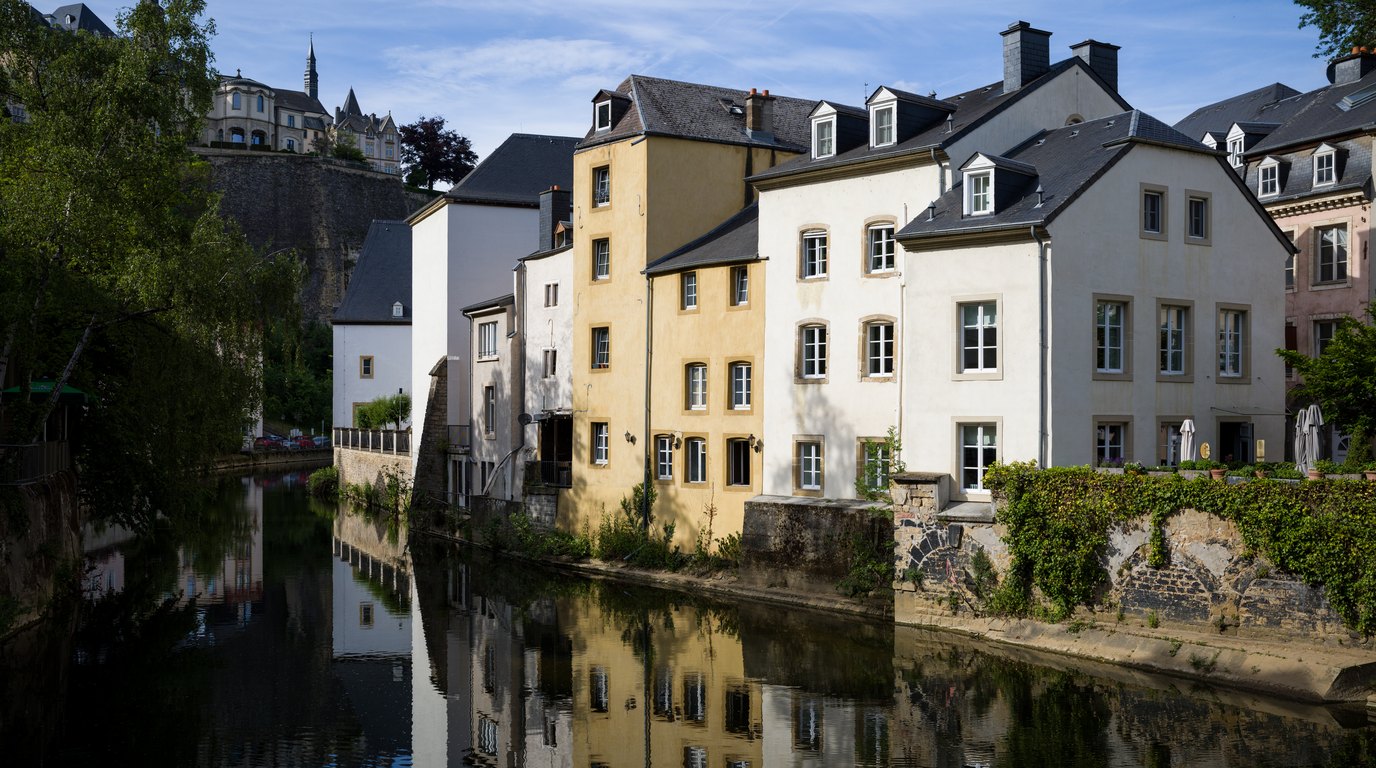
Luxembourg and the Belgian Ardennes
Luxembourg's castles, rock-cut casemates below the old town, the sandstone gorges of the Mullerthal and the Belgian Ardennes in one ten-day family loop. The whole area fits into a circle you can drive across in a morning, so you can keep the daily transfer to a minimum and leave the rest of the time for castles and trails. The roads in the Sûre, Our and Semois valleys are narrow but quiet, with no mountain passes, which is an ideal combination for a motorhome. The programme can be arranged around the weather: when it rains you head for the casemates and the museums, when the sun is out you head for the gorges of Little Switzerland.
Itinerary
West across Bavaria
You set out from Prague via Rozvadov and continue on German motorways past Nuremberg into Franconia. The first day is pure transit, so it pays to leave early in the morning and to plan the overnight stop somewhere around Würzburg. Before you turn in, check the tyre pressures and how firmly the bikes sit on the rack — motorway speeds test both of them reliably.
The Rhineland, Trier and on to Luxembourg
On the second day you carry on through Frankfurt into the Rhineland and follow the Moselle valley down to Trier. Germany's oldest city is worth a stop for the Porta Nigra gate and the Roman baths alone, and both are only a short hop from the motorway. In the afternoon you cross the border and settle into a campsite near Luxembourg City, so that the whole of the next day belongs to the capital.
Luxembourg City and the Bock Casemates
The old quarters and the fortifications of the Luxembourg capital are on the UNESCO list and are best explored on foot. The Bock Casemates lead you into galleries carved straight into the rocky promontory on which the city was founded, and up above you then walk the Chemin de la Corniche rampart promenade with views over the Alzette valley and the Grund quarter. The rest of the day goes on the upper town — the Grand Ducal Palace, the Place d'Armes square and the steps back down to the river.
Echternach and the first steps on the Mullerthal Trail
The country's oldest town grew up around the abbey founded in the 7th century by Saint Willibrord; you will find his tomb in the crypt of the basilica. On the Tuesday after Whitsun the hopping procession, inscribed on the UNESCO intangible heritage list, takes place here; the rest of the year Echternach is a quiet little town with a lake on its edge. In the afternoon you set out from it onto the first section of the Mullerthal Trail, which can be taken from here as a loop that brings you back for lunch.
The sandstone gorges of Little Switzerland
The Mullerthal is nicknamed Luxembourg's Little Switzerland and it is the most demanding walking part of the whole trip. Waymarked routes lead through narrow sandstone gorges, up ladders and steps between blocks of rock and past the Schiessentümpel waterfall with its distinctive wooden footbridge. The loops come in different lengths, so the day can be put together according to how much energy the children have — and even in summer the gorges stay pleasantly cool.
Vianden above the Our valley
The castle above Vianden was built between the 11th and the 14th century on the foundations of a Roman fort, and after an extensive restoration it is one of the country's leading monuments. The tour has twenty-two stations and plenty of stairs, so allow most of the morning for it; admission is charged and children pay a considerably lower rate than adults. Victor Hugo lived in exile in the small town below the castle and his house is a museum today.
Clervaux and the crossing into Belgium
The castle in Clervaux burned down in December 1944 during the Ardennes offensive and the state later had it rebuilt. Today it houses The Family of Man photographic exhibition, assembled in 1955 by Edward Steichen and on the UNESCO Memory of the World register since 2003, along with a museum of the Battle of the Bulge and a collection of models of Luxembourg castles. In the afternoon you cross the Luxembourg Éislek into Belgium and by the evening you are settled in the Semois valley near Bouillon.
Bouillon and the citadel above the Meuse
The castle in Bouillon has stood above a meander of the Semois for more than a thousand years and is linked to Godfrey of Bouillon, who pledged the estate so that he could set off on the First Crusade. Inside there are underground passages, a tower with a full circle of views over the little town and birds-of-prey displays, usually the biggest draw of the day for children. In the afternoon you drive on to the Meuse at Dinant, where the citadel presides over the town and where Adolphe Sax, the inventor of the saxophone, was born.
Back home through Germany
Split the journey home into two stages: on the first day you get back through Trier and the Rhineland to somewhere in Franconia, on the second only the routine stretch via Nuremberg and Pilsen is left. Back home there is then time to empty the tanks and clean out the vehicle. Before you leave Luxembourg it is still worth filling up the tank — fuel there tends to be cheaper than in the neighbouring countries.
Practical motorhome information
Up to 3.5 t: right at the start you need a Czech electronic vignette for the D5 motorway to Rozvadov — the ten-day one costs around three hundred crowns. Neither Germany, Luxembourg nor Belgium then charges a motorway fee for this category, so the rest of the route there and back is free of vignettes and tolls, with only ordinary parking charges in the towns. Over 3.5 t: in Czechia the vignette is replaced by the MYTO CZ toll, which requires an on-board unit; the Luxembourg Eurovignette applies only to vehicles from twelve tonnes up, while the Belgian Viapass distance charge and the German toll apply to vehicles over 3.5 t intended for the carriage of goods, which a motorhome is not — with a heavier vehicle, check the vehicle category in your registration document all the same. There is no toll section of road on the route — the budget is shaped more by admission fees: Vianden Castle costs an adult around thirteen euros and children considerably less, and to that add entry to the casemates, to the castle in Bouillon and to the citadel in Dinant. The cable car up to the Dinant citadel is out of service because of a major reconstruction; a road and a stairway lead to the top.
Camping Kockelscheuer, Luxembourg-Kockelscheuer (route de Bettembourg) — pitches for motorhomes, a dump station and a drinking water point, a good base for visiting the capital · Camping Officiel Wollefsschlucht, Echternach (17, route de Diekirch) — run by the local tourist syndicate, a short walk from the basilica and from the start of the Mullerthal Trail · Camping de l'Our, Vianden (3, route de Bettel) — in the valley of the river Our below the castle · Camping officiel de Clervaux, Clervaux (33, Klatzewee) — the municipal campsite in the north of the Éislek · Camping communal de Devant-Bouvignes, Bouvignes-sur-Meuse near Dinant (Quai du Camping) — a municipal site right on the Meuse that takes caravans and motorhomes
Camping outside campsites and designated overnight areas is not permitted in Luxembourg or in Wallonia, so count on a campsite for every night; a reservation is worth making mainly in July and August, when the sites in the Éislek fill up with Dutch and Belgian visitors. Neither the historic centre of Luxembourg City nor the narrow embankment in Dinant is a place to squeeze a motorhome into — leave the vehicle at the campsite and head into the centre on foot or by public transport, which is free of charge throughout Luxembourg (except for first class on trains).
Camping Kockelscheuer near Luxembourg City has both a dump station and a drinking water point, so it pays to sort the tanks out as soon as you arrive, before you head north into the Éislek. Further along the route the servicing is handled by the individual campsites — Wollefsschlucht in Echternach, the site by the river Our in Vianden, the municipal campsite in Clervaux — and in the Belgian part by the municipal site in Bouvignes-sur-Meuse. Valley campsites tend to run a reduced operation outside the main season, so in April and October it is better to confirm opening times by phone in advance.
Stops along the route
You may also like
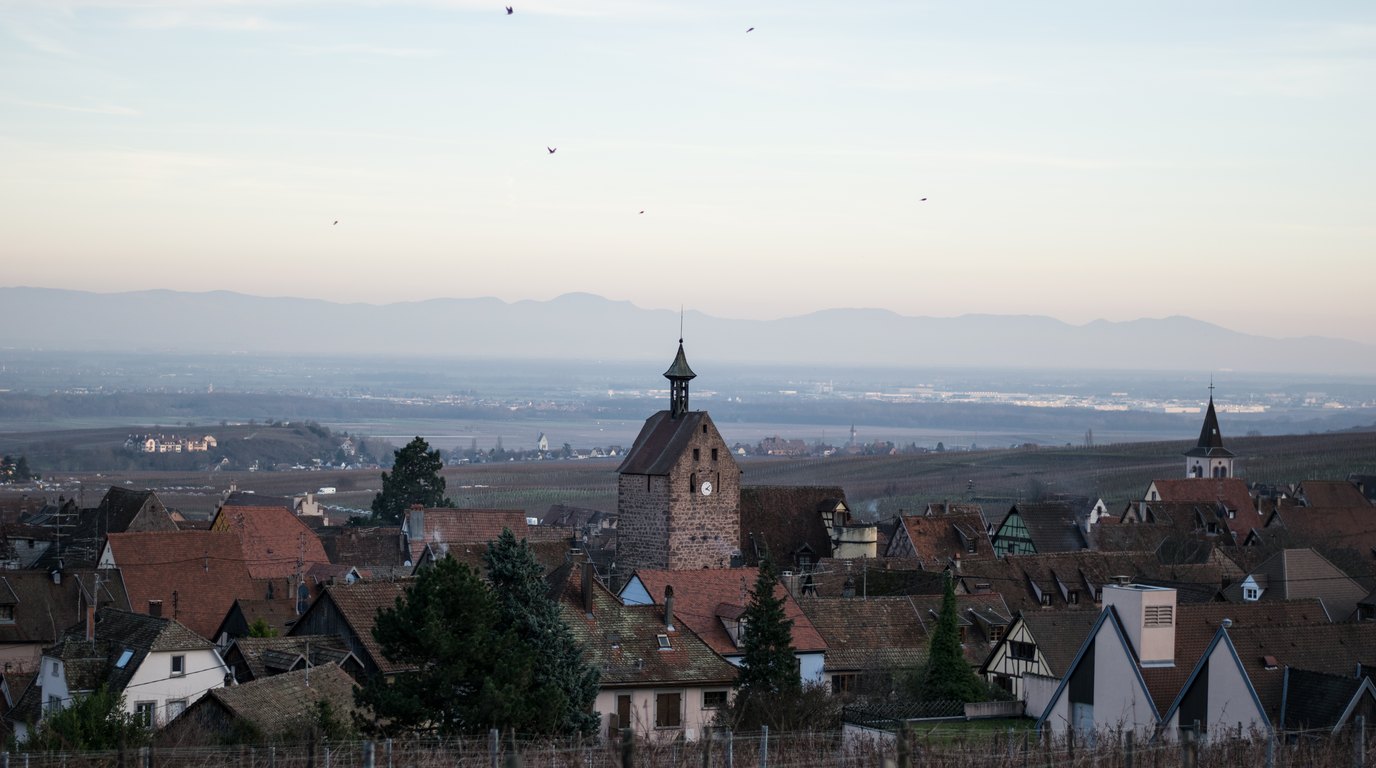
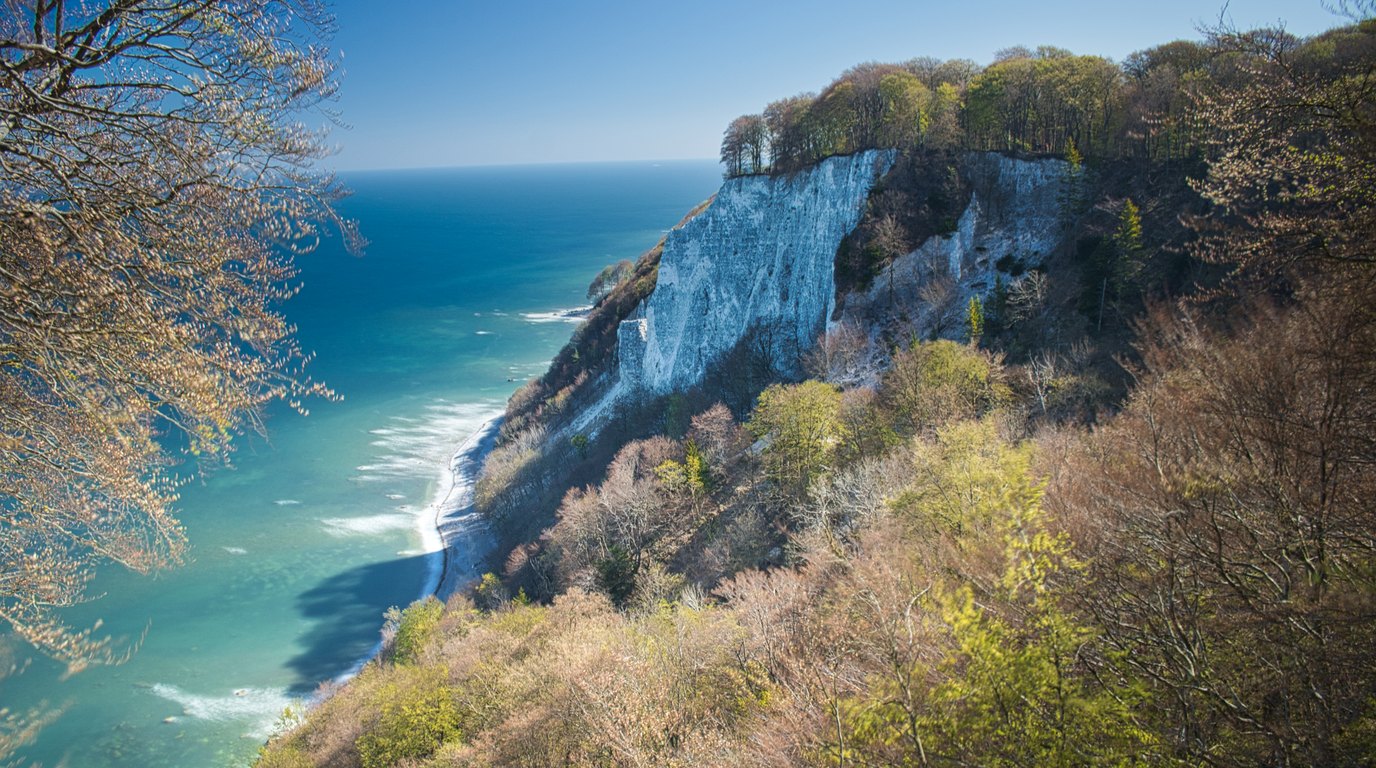
The map and GPX contain separate planning waypoints, not a driving route. Follow the itinerary for access to attractions and campsites.
Adria Matrix
Ten days with four people is about space, not speed: the Matrix offers four to five berths and a garage that swallows the hiking gear for the Mullerthal Trail as well as the bikes for the cycle paths in the Sûre valley. The double floor comes into its own in April and October, when the nights in the Ardennes valleys cool down quickly, and the semi-integrated body handles the narrow roads around Vianden and Bouillon better than a fully integrated vehicle.
Get road trip ideas by email
Leave us your email and we will send motorhome inspiration and stock updates.
Adria Karavany · https://www.adriakaravany.cz/en/vylety/lucembursko-a-belgicke-ardeny/