
Provence and the Camargue
Roman aqueducts, the Papal Palace in Avignon, lavender on the Valensole plateau and flamingos in the Rhône delta on one motorhome route. The south of France is rewarding to travel by motorhome — the destinations lie close together, the roads are good and outside August it is neither so hot nor so crowded. The route links the ancient monuments around the Gard and Arles, the rock villages of the Alpilles, the bird-filled delta of the Camargue and, to the east, the Verdon Gorge. In between you cross the Valensole plateau, coloured in summer by its lavender fields.
Itinerary
Across Germany to the Rhône valley
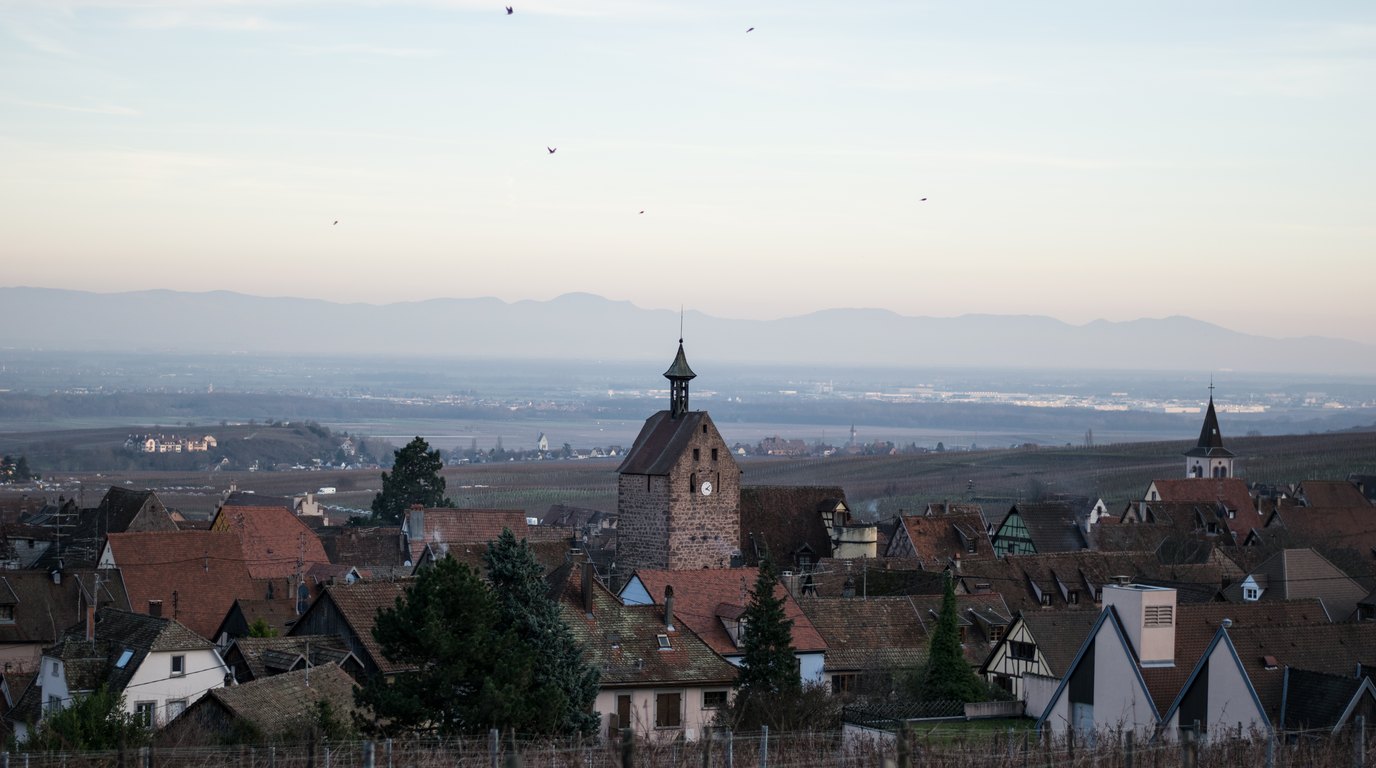
From the Czech Republic the drive runs via Nuremberg and Karlsruhe into Alsace, where it makes sense to spend the night, and the next day south through the Saône and Rhône valleys. If you set off early in the morning, you will reach Remoulins below the Pont du Gard on the second afternoon. That leaves time for a walk along the bank of the Gardon and a first dinner outdoors.
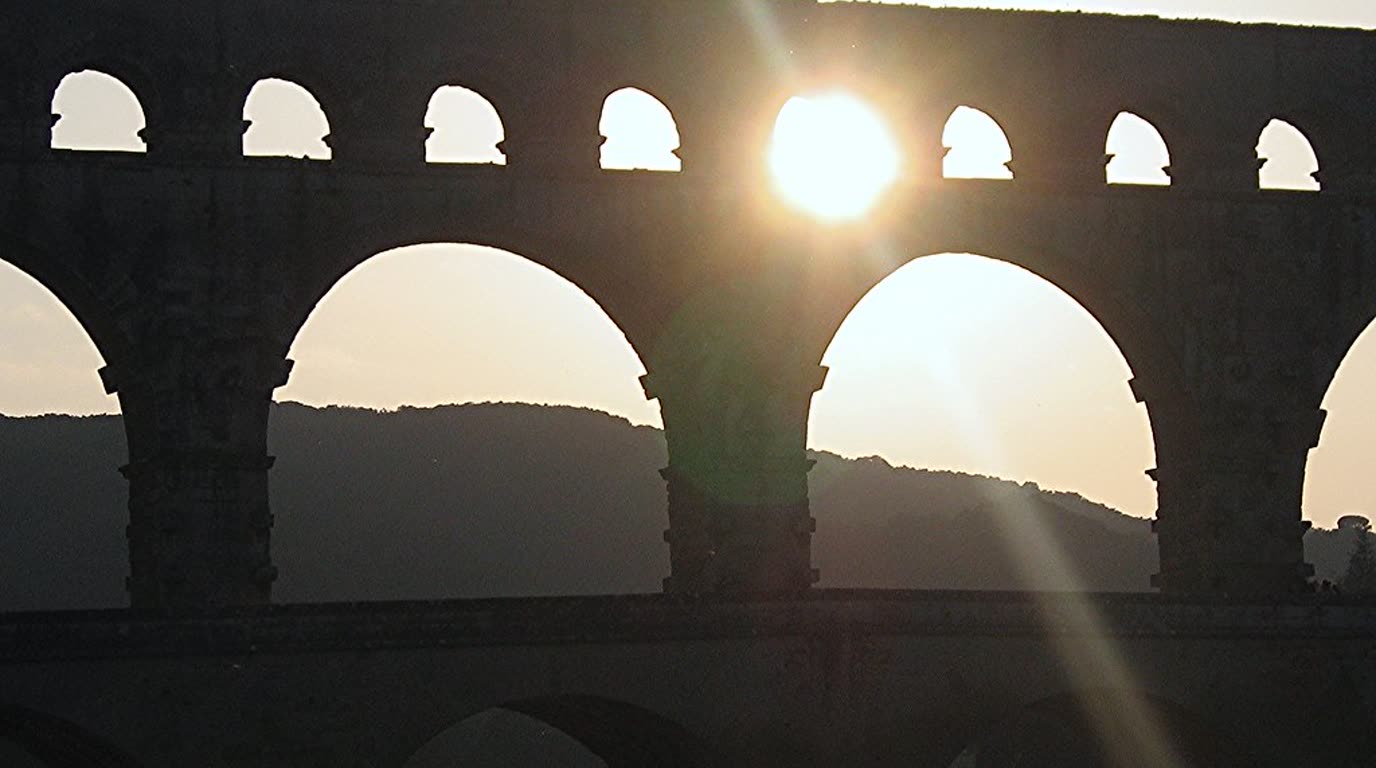
Pont du Gard
The three-tiered Roman aqueduct across the Gardon dates from the 1st century and is on the UNESCO list. Walking up to the bridge is free; you pay for parking and for the museum, which explains clearly how the Romans carried the water all the way to Nîmes. Trails loop through the parched garrigue on both banks — bring sturdy shoes and plenty of water.
Nîmes, the Roman city
The amphitheatre in Nîmes is one of the best preserved in the entire Roman world and still hosts concerts today. A short walk away stands the Maison Carrée, a temple built under the emperor Augustus, which was added to the UNESCO list in 2023. The historic centre is small and covered on foot, so leave the vehicle at a park-and-ride and return to the Gardon for the evening.
Avignon and the Papal Palace
The Papal Palace is the largest Gothic building of the Middle Ages and, together with the Saint-Bénézet bridge and the city walls, forms a UNESCO site. Campsites are on the Île de la Barthelasse and a free river shuttle boat crosses the Rhône into town from the quai de la Ligne, so the vehicle can stay parked all day. Keep the early evening for the Rocher des Doms gardens and their view over the river.
Les Baux-de-Provence and the Alpilles
The village sits on a rock spur, is pedestrian-only and no motorhome will drive up into it: you park at the paid car parks below it (Col de la Vayède, Carrières) and walk up, and in season they fill by mid-morning. At the top stand the castle ruins with replicas of medieval siege engines, while down in a former quarry the Carrières des Lumières runs its projected image shows. Break the return drive at Saint-Rémy-de-Provence, home to the ancient site of Glanum.
Arles
Arles has a Roman arena, an ancient theatre and underground cryptoporticoes, and you can walk round all of it in a single morning. The Saturday market on the Boulevard des Lices runs the whole length of the avenue — cheeses, olives, rice and sausage from the Camargue. The afternoon is left for the Van Gogh sites, the yellow café on the Place du Forum and the courtyard of the former hospital.
The Camargue and Saintes-Maries-de-la-Mer
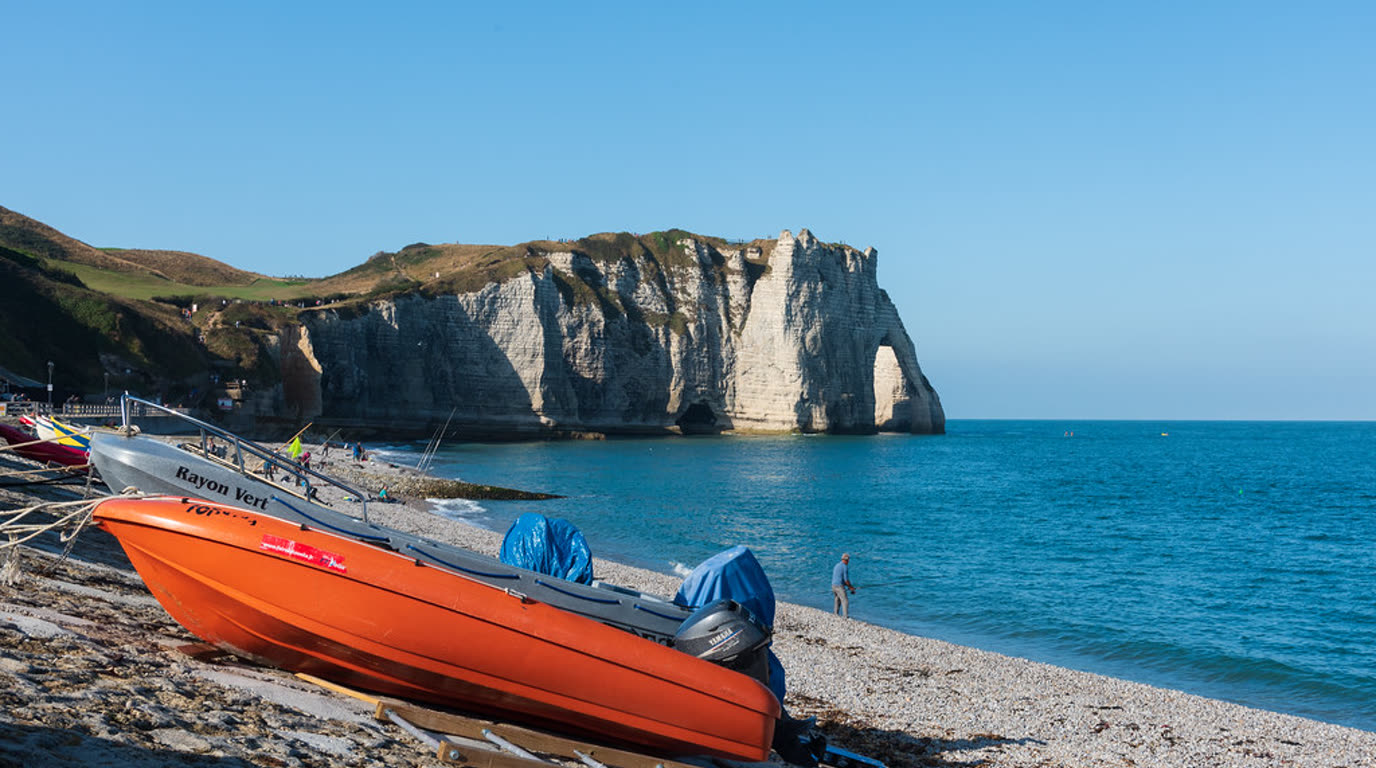
The Rhône delta is flat, salty and full of birds — at the Parc ornithologique de Pont de Gau on the D570 road you watch the flamingos from boardwalks above the lagoons. Saintes-Maries-de-la-Mer has a fortified church from the 11th and 12th centuries, to which Roma pilgrims travel every May to honour Saint Sarah. Expect mosquitoes and sun without shade; repellent and window screens are not over-cautious here.
The Valensole plateau
Heading east, the route leaves the plain and climbs inland onto the plateau, where the lavender fields run beyond the horizon. They flower roughly from mid-June to the end of July, the higher fields a little longer — outside that window they are cut and brown, so treat the lavender as a bonus rather than a certainty. You can end the day in Moustiers-Sainte-Marie, a village wedged beneath a rocky gorge, with a gilded star hanging on a chain above it.
The Verdon Gorge
The Point Sublime viewpoint above Rougon shows the entrance to the canyon from above and is the most striking view on the whole route. The Route des Crêtes loop is a narrow, winding road with a string of viewpoints; its tunnels have a height limit of 3.60 m and a vehicle length limit of 12 m applies to the whole loop, so with a longer vehicle it is more comfortable to leave it at the campsite and set out by car or by bike. Check before you go whether the road is open — it tends to be closed over the winter and in spring there are restrictions because of nesting vultures.
Back through the Rhône valley via Orange
The Point Sublime viewpoint above Rougon shows the entrance to the canyon from above and is the most striking view on the whole route. The panoramic Route des Crêtes loop (D23) above La Palud-sur-Verdon is 23 km long, strings together fifteen viewpoints and runs one-way clockwise along part of its length; it is usually open in full from roughly the end of March to the end of November. On the roads through the gorge a vehicle length limit of 12 m and a height limit of 4.30 m apply, dropping to 3.60 m in the tunnels — with a taller vehicle do not attempt them and go round along the rim of the canyon instead.
The journey home
On the twelfth day you drive past Lyon into Burgundy or Alsace for the last overnight stop. The thirteenth day leaves the run home through southern Germany. You can ease the pace by moving that final stop closer to the Czech border.
Practical motorhome information
France has no vignettes; on motorways you pay a toll by section according to the vehicle class. A motorhome up to 3.5 t with a height between 2 and 3 metres falls into class 2 under the VINCI Autoroutes classification; a vehicle from 3 metres in height or over 3.5 t belongs to the more expensive class 3. Germany you cross on the way free of charge — motorhomes are exempt from the German toll even when they weigh more than 3.5 t. What is compulsory instead is the Crit'Air sticker: you order it in advance online at certificat-air.gouv.fr, it costs a few euros and stays valid for the whole life of the vehicle, and it is not sold at the border. Without it you may not enter the low-emission zones — in Lyon (including the M6 and M7 through routes) only Crit'Air categories 1 to 3 are admitted, and in Marseille not even Crit'Air 3 has been allowed since September 2024. The Pont du Gard has a charge of its own: parking works out at around 9 € a day, walking up to the bridge is free, and the museum exhibition costs 8 € per adult, with children under 18 free.
Camping La Sousta, Remoulins — pitches for motorhomes right by the Pont du Gard, open roughly from the end of March to the beginning of November · Camping Bagatelle, Avignon (Île de la Barthelasse) — open all year round, into the centre across the Rhône without the vehicle · Camping Monplaisir, Saint-Rémy-de-Provence — a base for both Les Baux and Glanum, season from the end of March to the end of October · Camping City, Arles (Route de Crau) — pitches for motorhomes, open from April to the beginning of November · Camping La Brise, Saintes-Maries-de-la-Mer — a large campsite by the beach in the Camargue, open for much of the year · Camping Saint Clair, Moustiers-Sainte-Marie — at the entrance to the Verdon Gorge, open from April to the beginning of November · Sandaya Domaine du Verdon, Castellane — a campsite on the bank of the Verdon, season roughly from May to the end of September
In France you may park a motorhome anywhere another vehicle is allowed to stand, but setting up camp outside a campsite or a designated aire — awning, tables, levelling chocks — is not permitted. Wild camping is banned in protected natural areas including the Verdon; instead, the Verdon has a network of designated areas for motorhomes, some of them municipal and free of charge. In the coastal towns of the Camargue capacity is tight in high season, so book a campsite in advance.
The most reliable service on the Camargue part of the route is at Camping La Brise in Saintes-Maries-de-la-Mer — there are waste disposal points for motorhomes and water taps in every sector. On the Verdon part, the free municipal motorhome area in Saint-André-les-Alpes covers the basics. In the villages you will come across public fountains, but in Provence they are often marked “eau non potable” — unless a sign confirms the water is drinkable, do not put it in your tank.
Stops along the route
You may also like
The map and GPX contain separate planning waypoints, not a driving route. Follow the itinerary for access to attractions and campsites.
Adria Compact
The Adria Compact is a compact semi-integrated motorhome that gets you where a longer A-class has to back off — into the lanes below Les Baux, onto the car park in Moustiers-Sainte-Marie and up the hairpins above the Verdon. If it stays under three metres in height and 3.5 tonnes, you also cover the entire French motorway network in the cheaper toll class 2.
Get road trip ideas by email
Leave us your email and we will send motorhome inspiration and stock updates.
Adria Karavany · https://www.adriakaravany.cz/en/vylety/provence-a-camargue/