
Veneto: Venice, the lagoon and Palladio's cities
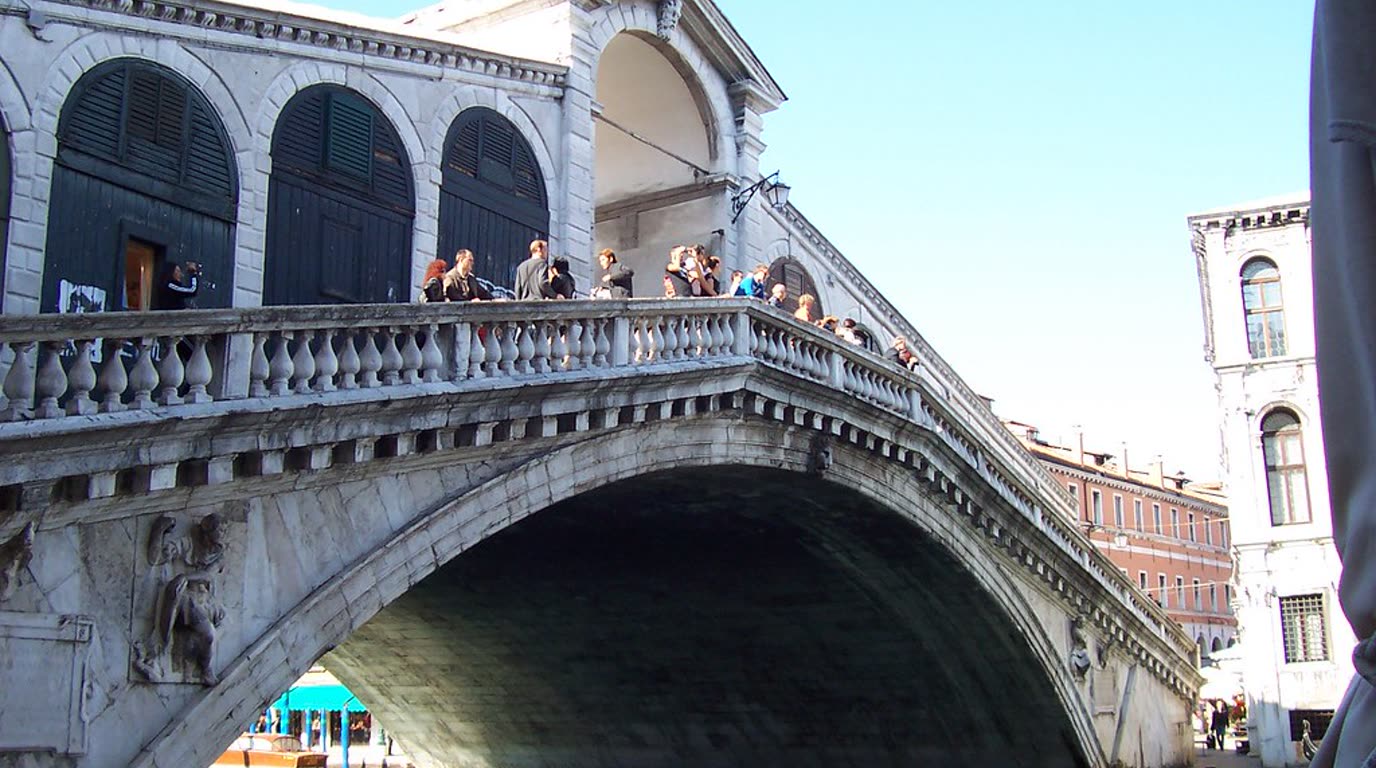
You cannot drive a motorhome into Venice itself, but the surrounding Veneto is flat and the lagoon starts with a boat from your campsite. You set up base on the shore of the lagoon and travel from there to the Rialto, to Burano and Murano or to the fishing town of Chioggia. On the mainland wait Padua with Prato della Valle, Vicenza with the Palladian villas and quiet Treviso threaded with arms of the river Sile. Spring and early autumn make the most sense here — in summer the lagoon is humid and packed, while the end of October brings the risk of acqua alta.
Itinerary
South through Austria
From Prague the most comfortable route runs via Linz and the Salzburg region into Carinthia — the A10 motorway with the Tauern Tunnel carries a separate toll, but in a motorhome it saves you a great deal of climbing. The last Austrian stretch towards Tarvisio already runs between the limestone peaks of the Julian Alps. Spend the night in Carinthia by one of the lakes, so that you reach the lagoon rested the next day.
Treviso and arrival at the lagoon
In the morning you drop from the Alpine foothills onto the Venetian plain, and before you head for the water, stop in Treviso. The river Sile flows around the town, arcades run along Piazza dei Signori and in the lanes you come across a fish market on a little island in the middle of a canal — a quiet prelude to what follows. In the afternoon you reach the campsite on the shore of the lagoon, and the evening silhouette of Venice across the water is the best welcome you could ask for.
Venice: Rialto, San Marco and Dorsoduro
You travel to the historic centre by boat, and the crossing of the lagoon from the campsite is an experience in itself. Set off as early in the morning as you can; before nine the Rialto and Piazza San Marco are still almost calm. In the afternoon it pays to turn off the main routes into Dorsoduro or Cannaregio, where people drink a spritz by the canal and the prices are a class friendlier.
Burano, Murano and Torcello
Set aside a whole day for the lagoon islands, otherwise you will not manage them. Murano can be walked in a morning — glass workshops, the glass museum and the basilica of Santi Maria e Donato with its mosaic floor. Burano with its painted houses and lacemaking tradition belongs to the afternoon, and anyone with energy left can hop by boat over to neighbouring Torcello and its ancient cathedral of Santa Maria Assunta.
Chioggia and Sottomarina
The southern tip of the lagoon is Venice in miniature and without the crowds: the Vena canal lined with fishing boats, the broad Corso del Popolo and a fish market the whole town lives off. Beyond the bridge lies Sottomarina with its long sandy beach, so the afternoon can bring your first swim. Have the local catch for dinner — in Chioggia fish is not bought, it is caught.
Padua: Giotto, Prato della Valle and the arcades
Padua is a student city with one of the most precious fresco cycles in Europe: Giotto's Scrovegni Chapel can only be seen with a reservation made in advance, entry is timed and you spend exactly a quarter of an hour inside. Then head for the Basilica of Saint Anthony and Prato della Valle, a huge elliptical square with a water ring and a wreath of statues. The rest of the day belongs to the arcades, the markets around Palazzo della Ragione and a coffee at Caffè Pedrocchi.
Vicenza and the Palladian villas
Vicenza is a Palladio textbook in the open air — the Basilica Palladiana on the main square and the Teatro Olimpico with its wooden set of a street skewed in perspective. Of the villas, two neighbouring ones above the town are the easiest to reach: Villa Valmarana ai Nani with Tiepolo's frescoes is usually open daily in season, while the famous Villa La Rotonda opens from April to October only on Friday, Saturday and Sunday, and the interior only on selected days — plan the day accordingly. In the afternoon get behind the wheel and cross back over the border into Austria.
Back to the Czech Republic
The last day is a straight run home through Carinthia and the Salzburg region. Set off early and there is still time for lunch by one of the Austrian lakes, with an unhurried arrival in the afternoon.
Practical motorhome information
Up to 3.5 t: in Austria an electronic motorway vignette is enough (a ten-day one costs on the order of €13), and on top of that you pay a separate toll for the Tauern Tunnel on the A10 — a single trip in a vehicle up to 3.5 t comes to roughly €15. Italy has no vignette; tolls are collected at toll gates according to the stretch you drive, and a motorhome with two axles and a height over 1.30 m above the first axle falls into class B, so it costs more than a car. Over 3.5 t: the Austrian vignette no longer applies, you need a GO-Box on-board unit (around €12 to buy) and the toll is charged per kilometre according to the number of axles and the emission class. In Italy, by contrast, the rate does not follow weight at all — what counts is the number of axles, so a two-axle vehicle stays in class B and a three-axle one falls into class 3. Count on the Venice access fee as well: in the 2026 season it was charged on selected days from 3 April to 26 July between 8:30 and 16:00, €5 with a reservation made in advance and €10 at the last minute. Dates, rates and exemptions change every season, so check them before you travel at cda.ve.it.
Camping Fusina, Venezia-Malcontenta — open all year, the boat to Venice sails straight from the campsite to the Zattere stop · Camping Serenissima, Oriago di Mira — a seasonal campsite on the Riviera del Brenta, buses to both Venice and Padua stop at the entrance · Marina di Venezia Camping Village, Cavallino-Treporti near Punta Sabbioni — a large campsite by the beach, open in 2026 from roughly mid-April to mid-October, with vaporetto line 14 sailing from Punta Sabbioni · Miramare Camping Village, Sottomarina di Chioggia — right by the beach, with the historic core of Chioggia within reach on foot or by bike · Camping Vicenza, Vicenza (Strada Pelosa) — a small campsite by the Vicenza Est exit, a practical base for the Palladian villas
Outside campsites there is no camping in Italy: an overnight stay in a car park will pass in many places, but an unfurled awning, a table or extended levelling legs already count as camping, and municipal ordinances in the coastal towns of the Veneto forbid it. In the lagoon, therefore, count on campsites — the network is dense and something is usually open even outside the main season. In Venice you do not drive at all, and Padua, Vicenza, Treviso and Chioggia all have their historic centres closed off by camera-controlled ZTL zones; leave the vehicle in the park-and-ride car parks on the edge of town and walk in or take public transport. A camera fine can reach you at home several months later, so it is not worth trying.
Camping Fusina in Malcontenta has a camper service point and is open all year, which makes it useful for an April or October date, when most of the lagoon campsites are closed. In the south of the lagoon you can fill up with water and empty waste at Miramare Camping Village in Sottomarina, and on the western part of the route at Camping Vicenza, which lists a camper service point among its facilities. Tap water in the Veneto is drinkable, but always deal with a full tank at a campsite — you will find no service point in the ZTL zones or at the lagoon boat landings.
Stops along the route
You may also like
The map and GPX contain separate planning waypoints, not a driving route. Follow the itinerary for access to attractions and campsites.
Adria Compact
The Adria Compact is under seven metres long, and on this route that pays off every single day — a low-profile motorhome this size fits into a smaller car park on the edge of town and takes the narrow lanes up into the hills above Vicenza to the Palladian villas without a moment's stress. It also stays under 3.5 t, so in Austria an ordinary vignette is all you need and the GO-Box never enters the picture.
Get road trip ideas by email
Leave us your email and we will send motorhome inspiration and stock updates.
Adria Karavany · https://www.adriakaravany.cz/en/vylety/benatsko-benatky-laguna-palladiova-mesta/