
Denmark from Jutland to Copenhagen and the Møns Klint cliffs
Denmark's oldest town Ribe, Legoland in Billund, Andersen's Odense, Copenhagen and the chalk cliffs of Møns Klint in one trip. Denmark is a rewarding introduction to the north for a first longer motorhome journey: flat roads, short hops between stops and a dense network of campsites and self-service motorhome stopovers. The route runs from Jutland across Funen to Zealand and ends on the island of Møn, from where you can either drive back overland or take a ferry across the Baltic. It works best from May to September, when the seasonal attractions are open and the evenings are long.
Itinerary
Through Germany to the north
The first day is pure driving. From Prague you head via Dresden and Berlin and plan the overnight stop roughly halfway north — the area around Lüneburg or the southern edge of Hamburg works well, about six hundred kilometres from Prague. That leaves only a two-hour stretch on to Flensburg for the following morning. The long stretches of roadworks around Hamburg are more likely to hold you up than the border itself.
Marshes, dykes and arrival in Ribe
In the morning you cross the border at Flensburg and the landscape flattens into a plain criss-crossed by dykes, canals and grazing sheep. You reach Ribe in the afternoon and set off into the old town in the evening — crooked lanes, half-timbered houses and a cathedral that is visible above them from everywhere. In season the town keeps up the tradition of the night watchman, who walks the streets after dark.
Ribe and the Wadden Sea
Ribe is reckoned to be Denmark's oldest town and can be walked in a morning: the cathedral has a tower open to visitors with a view across the whole marsh, and the Ribes Vikinger museum displays finds from the Viking and medieval town. The Ribe VikingeCenter open-air museum is seasonal, so check the opening days in advance. The afternoon belongs to the Wadden Sea, a UNESCO World Heritage site — at low tide the seabed is exposed all the way to the horizon, and at the Kammerslusen lock you can clearly see how the sea is kept away from the town. At the end of September flocks of starlings gather over the marsh in a display the Danes call sort sol.
Billund and Legoland
The drive to Billund is short, so you can be at the gate as soon as it opens — in high season that makes a difference, because the queues at the rides build up through the afternoon. Legoland runs seasonally and its opening calendar changes over the course of the year, so check your date in advance and buy tickets online. Anyone who has had enough of rides can head instead for LEGO House in the centre of the town, where the point is building rather than riding.
Across the Little Belt to Funen and Odense
The road to Funen crosses the bridge over the Little Belt and it is the most enjoyable crossing of the whole route. In Odense you spend the afternoon in the Andersen quarter: the H. C. Andersens Hus museum is staged more as a walk through a fairy tale than as an exhibition, and the low houses of the old town stand all around it. Children take to Den Fynske Landsby, an open-air museum with livestock, workshops and farm buildings.
Across the Great Belt to Copenhagen
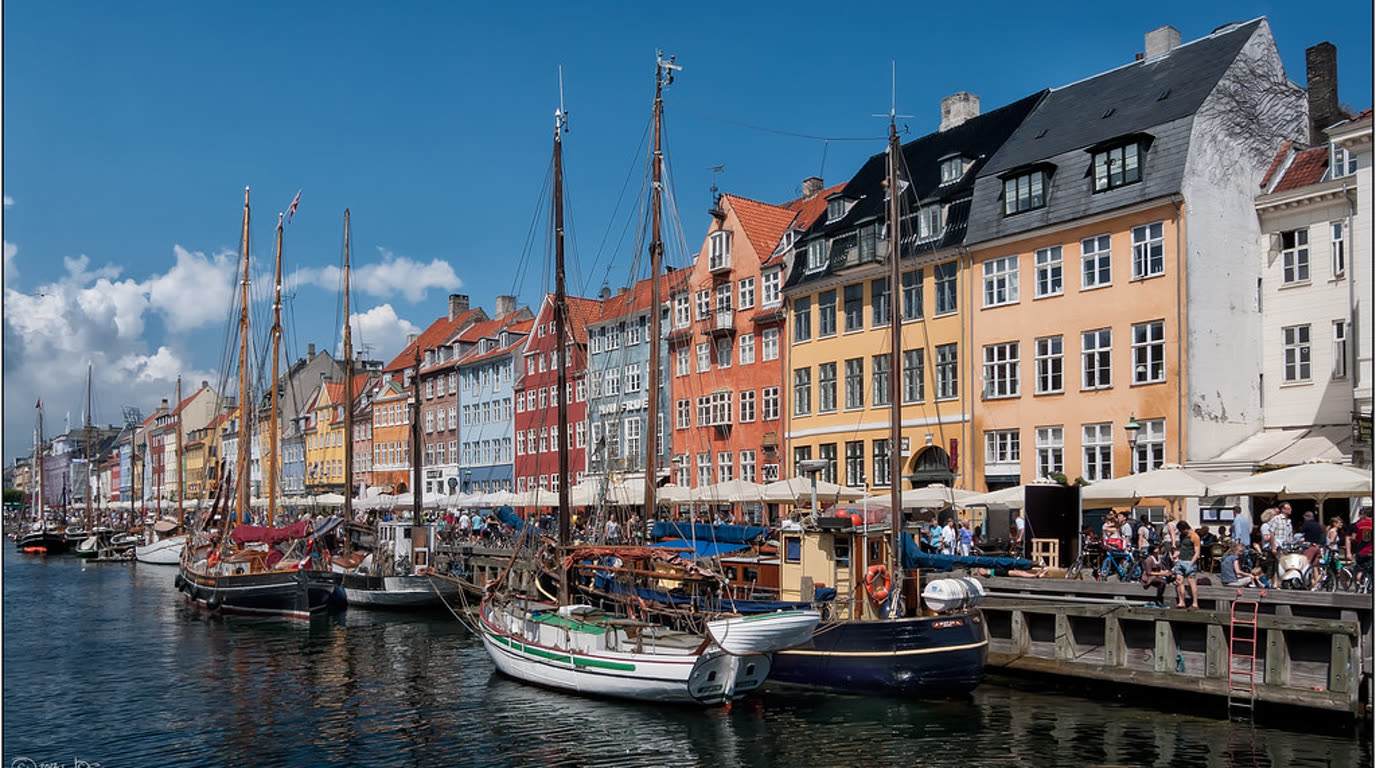
The morning brings the bridge over the Great Belt, a long arc between two islands that puts you on Zealand in no time. You arrive in Copenhagen around midday and set off into the city travelling light. The afternoon is enough for Nyhavn with its row of colourful houses along the water, and the evening for Tivoli, which lights up after dark.
Copenhagen without the car
The whole day belongs to the city. Rosenborg Castle keeps the crown jewels in its basement, the tower of Christiansborg can be climbed free of charge, and at Amalienborg you can time your visit for the changing of the guard. For lunch it is worth heading to the Torvehallerne market hall, where Danish cooking can be sampled a piece at a time. The afternoon leaves time for Christiania, the botanical garden or a canal boat trip that shows the city from the water.
Kronborg and the Øresund coast
The coast road north follows the Øresund and is a nicer choice than the motorway. Kronborg in Helsingør is a UNESCO site made famous by Shakespeare — beneath the castle you walk through dark casemates where the statue of Holger Danske sleeps. On the way you can stop at the Louisiana museum of modern art in Humlebæk, whose sculpture garden runs all the way down to the shore.
To the island of Møn beneath the chalk cliffs
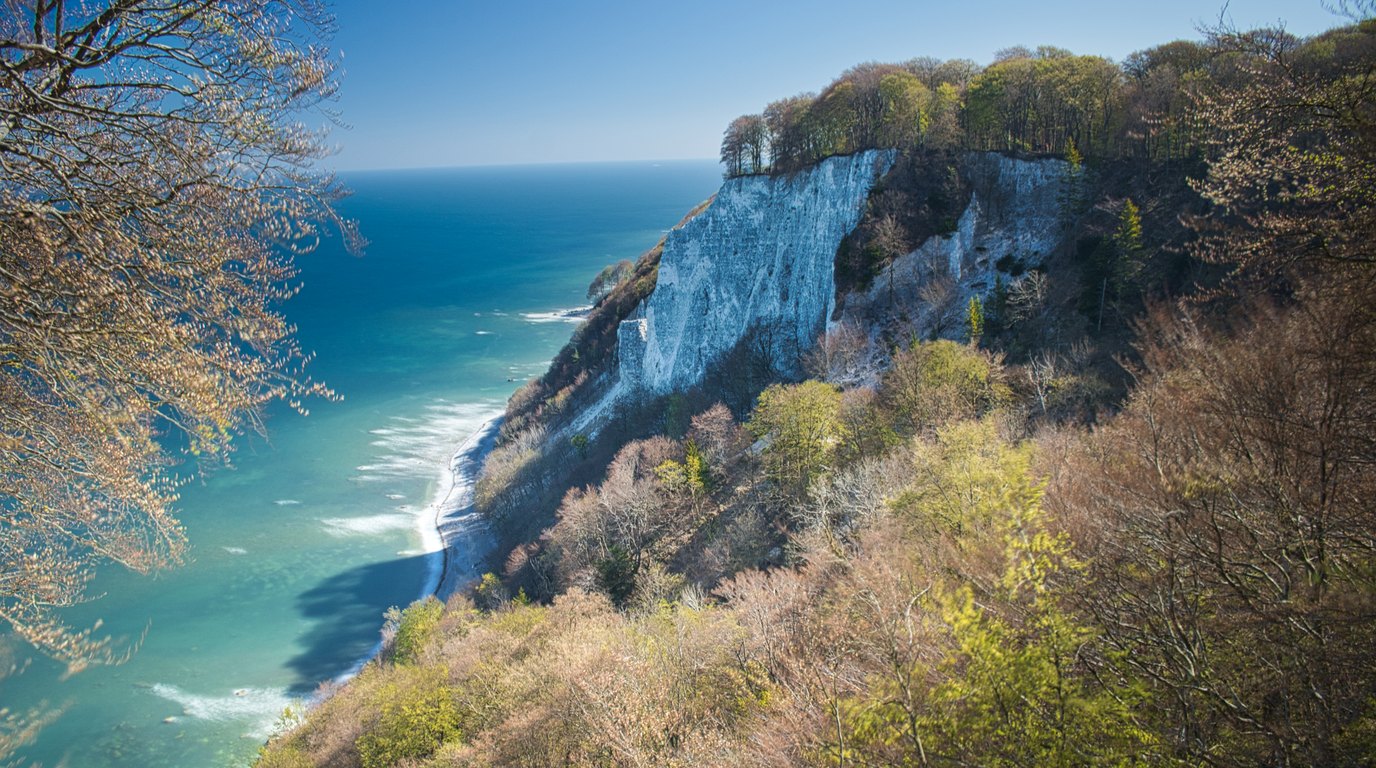
From Helsingør you skirt Copenhagen and cross a series of bridges to Møn, an island where the pace slows down of its own accord. Møns Klint are chalk cliffs falling into turquoise water; as you enter the car park your number plate is read automatically and the parking fee (45 DKK) is paid at a machine or by QR code. A long staircase, the Maglevandstrappen, leads down to the beach — parts of it are closed from time to time because of landslides, so check the current route at the GeoCenter, which is usually open from Easter until the end of October. Møn is also one of the darkest places in Denmark: if the sky is clear, it is worth staying up in the evening for the Milky Way above the cliffs.
Møn and the crossing to Rostock
In the morning you can still fit in the romantic Liselund park below the cliffs, the whitewashed churches with Gothic frescoes at Elmelunde or Fanefjord, and the fishing village of Nyord. In the afternoon you drive south to Gedser and take the Scandlines ferry across to Rostock — in high season it pays to book a place in advance. You spend the night in Mecklenburg or a little further south.
The journey home
The last day is once again just driving — via Berlin and Dresden you make your way home. If you are not in a hurry, you can fit in a final stop in Saxon Switzerland and arrive towards the evening.
Practical motorhome information
Neither Denmark nor Germany has motorway vignettes. Up to 3.5 t you therefore drive the whole route without a road charge and the only fixed item is the bridge over the Great Belt between Funen and Zealand: it is charged by vehicle length, the category up to 6 m is the cheapest, the 6–10 m band (where most motorhomes fall) costs roughly half as much again, in the order of 400 DKK one way, and over 10 m more still — the current price list is at storebaelt.dk. Above 3.5 t the bridge rate is calculated separately and tends to be higher even at the same length. The German truck toll does not apply to motorhomes even above 3.5 t: it covers only vehicles designed or used for carrying goods. With a van conversion, though, it is worth having the motorhome use entered in the registration document so that you can prove it if checked. If you return by the Gedser–Rostock or Rødby–Puttgarden ferry, Scandlines adds a length surcharge for vehicles over 6 m — treat it as a separate item in the budget, not as a rounding error.
Ribe Camping, Farupvej 2, Ribe — open all year, with its own motorhome area next to the campsite · Randbøldal Camping, Dalen 9, Randbøldal near Billund — open all year, pitches for motorhomes and caravans · DCU Odense City Camp, Odense — campsite on the edge of town within reach of the Andersen quarter · DCU-Copenhagen Camp “Absalon”, Rødovre on the western edge of Copenhagen · Charlottenlund Fort Camping, Charlottenlund north of Copenhagen · Helsingør Camping Grønnehave, Strandalleen 2, Helsingør — open all year, a short walk from Kronborg · Møns Klint Resort (formerly Camp Møns Klint), Klintevej 544, Borre on the island of Møn
In Denmark you do not spend the night outside designated places — you sleep at campsites and at municipal or private autocamperpladser, of which there is a dense network across the country; they are usually self-service, with payment at a machine or by QR code. In Ribe there is also a separate stopover next to the campsite, Ribe Camping Quick Stop, without an electrical hook-up, which is handy for a single night in passing. Around Copenhagen and Helsingør, expect to leave the vehicle at the campsite and travel into the centre by train, metro or bike; Copenhagen has separate cycle lanes practically everywhere, so a bike is the quickest way around the city, while parking a large vehicle in the historic core is expensive and hard to find.
Danish campsites have a dump station (tømmestation) — near Copenhagen you will find one at Charlottenlund Fort Camping and at DCU-Copenhagen Camp “Absalon” in Rødovre, in Jutland at Ribe Camping. Without staying overnight, both fresh water and emptying can be dealt with at the Kammerslusen motorhome stopover near Ribe (Bjerrumvej 30): it is self-service, with drinking water, a dump station, electricity and showers, you may stay a maximum of two days, and it operates seasonally.
Stops along the route
You may also like
The map and GPX contain separate planning waypoints, not a driving route. Follow the itinerary for access to attractions and campsites.
Adria Matrix
The Matrix is a semi-integrated motorhome with a family layout and a garage at the rear — it takes the bikes you will use throughout this route: in Copenhagen, around the campsites and on flat Møn. At the same time the family gets separate sleeping areas and enough storage for an eleven-day trip with children.
Get road trip ideas by email
Leave us your email and we will send motorhome inspiration and stock updates.
Adria Karavany · https://www.adriakaravany.cz/en/vylety/dansko-jutsko-kodan-mons-klint/