
Eger, Tokaj and the Hortobágy Plain
Northeast Hungary in eight days: Eger Castle, the Baradla Cave, the wine cellars of Tokaj and the Hortobágy plain with its Nine-Arch Bridge. The route keeps to one compact loop — between stops you usually drive an hour, at most two, so the days belong to the places rather than to the transfers. Two days go on getting there and back, the remaining six stay for karst caves, wine cellars, horses and a plain where you can see beyond the horizon.
Itinerary
Across Slovakia to Aggtelek
From Prague you head via Brno onto the Slovak motorway and continue along the Low Tatras and the Slovak Ore Mountains to the southern edge of the Slovak Karst. It is a full day behind the wheel, so break it up with longer stops and count on arriving towards evening. Sort out both the Slovak e-vignette and the Hungarian e-matrica online before you leave — then you need not stop anywhere near the borders. Take your overnight stop in Aggtelek, so that the cave is right around the corner in the morning.
Baradla Cave and the Aggtelek Karst
Together with Domica on the Slovak side, Baradla belongs to the Caves of Aggtelek Karst and Slovak Karst inscribed on the UNESCO list. You can choose from three routes: the short tour from Aggtelek takes roughly an hour, the short tour from Jósvafő is a little longer, and the medium tour from Vörös-tó takes around a hundred minutes. Even in the greatest heat it is cold inside, so a hoodie and sturdy shoes belong in your backpack. The afternoon leaves time for one of the marked trails across the karst plateau.
From the karst to Tokaj
You come down from the limestone hills into the Hegyalja wine country, to the little town of Tokaj below Kopasz-hegy, where the Bodrog flows into the Tisza. The Tokaj wine region has been on the World Heritage list since 2002, and you can tell as soon as you see the cellars dug straight into the slopes. The afternoon is enough for a first tasting — the star is aszú, a sweet wine made from grapes touched by noble rot. Agree in advance on who drives; Hungary has zero tolerance for alcohol behind the wheel.
Moving on to the plain and the Nine-Arch Bridge
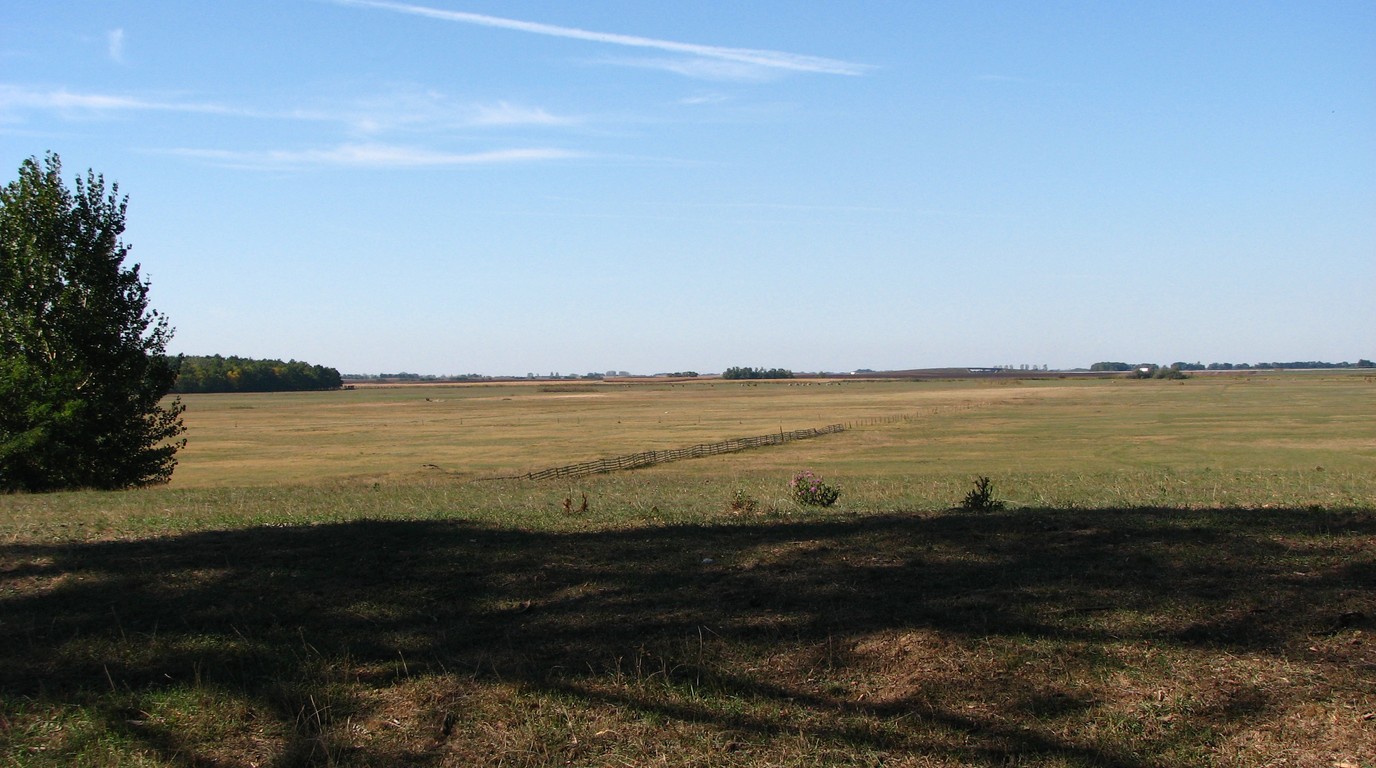
From Tokaj you drop down onto the Great Hungarian Plain and within a few dozen minutes the landscape turns completely flat. In Hortobágy the stone Nine-Arch Bridge stands by the old road, the best known structure in the whole national park, and right next to it a typical puszta csárda. Leave yourself time for sunset over the pastures — that is the main reason people come here. Hortobágy National Park is on the UNESCO list as well, as a cultural landscape shaped by herding.
Debrecen, Hungary's second city
You reach Debrecen from the plain in under an hour. In the centre stands the yellow Great Reformed Church, where Hungarian independence was proclaimed in 1849, and beside it the Déri Museum with paintings by Mihály Munkácsy and an Egyptian collection. North of the centre follows the Nagyerdő park with the Aquaticum baths, linked to the centre by tram. In the evening you return to the plain.
Eger: fortress, minaret and the Valley of the Beautiful Women
The drive back north to Eger takes up the morning. The castle above the town is a Hungarian national icon thanks to its defence against the Ottoman army in 1552, and from the bastions you look out over baroque roofs and the slender minaret — the northernmost surviving Ottoman minaret in Europe and one of only three left in Hungary. The early evening belongs to the Valley of the Beautiful Women on the edge of town, where dozens of wine cellars sit side by side and Egri Bikavér is poured, the red blend that made Eger famous.
Szilvásvárad and the Szalajka Valley
A short way north of Eger lies Szilvásvárad, known for its Lipizzaner stud farm and for the Szalajka Valley with the Fátyol waterfall. Cars are not allowed into the valley itself — you park at the edge of the village and carry on by narrow-gauge forest railway or on foot, which is incidentally the nicer option. The route is flat and even smaller children will manage it. For the night you return to Eger and get the vehicle ready for an early departure.
Return to the Czech Republic
The way home follows the same route across Slovakia and is once again a full day of driving. Set off early, plan a longer lunch break somewhere in the Hron valley and count on getting home towards evening.
Practical motorhome information
Up to 3.5 t (most motorhomes): in Hungary you need the electronic motorway pass e-matrica in category D1 (vehicles up to 3.5 t with no more than seven seats; a vehicle with more seats falls into the pricier D2). A ten-day D1 works out at roughly 6,600 HUF, a monthly one at about 10,700 HUF — you buy it online at nemzetiutdij.hu or at filling stations. In Slovakia, which you cross on the way there and back, the e-vignette for vehicles up to 3.5 t applies: ten days €10.80, thirty days €17.10. Over 3.5 t: Hungary does not use a motorway pass for heavier vehicles, which run in the HU-GO system, that is distance-based tolling with an on-board unit or a prepaid route ticket. In Slovakia, vehicles over 3.5 t come under the electronic tolling system emyto.sk, also with an on-board unit. There is no toll mountain road, tunnel or ferry anywhere on this route — passes and tolls are the whole transport item in your budget.
Tulipán Camper-park (Eger Stellplatz), Eger, Tulipánkert utca 3 — 27 pitches with electricity, showers, open all year round and around the clock · Nomád Baradla Kemping és Turistaszálló, Aggtelek, Baradla oldal 1 — a campsite right at the Aggtelek cave entrance with 50 motorhome and caravan pitches, electric hook-ups and a motorhome service point; the campsite runs from roughly mid-April to mid-October · Tiszavirág Camping és Vendégház, Tokaj — an area reserved for motorhomes with thirty electric hook-ups, within easy reach of the town centre · Ökotúra Vendégház és Kemping, Hortobágy — motorhome pitches with and without electricity, kitchen and washrooms; open seasonally from roughly the end of April to the beginning of November
In Hungary the expectation is that you spend the night at campsites and dedicated camper parks, not just anywhere by the road. In the Hortobágy and Aggtelek national parks camping outside marked places is prohibited and it is enforced — both areas are protected as World Heritage. The historic centre of Eger is awkward for a large vehicle, the car parks are small and charged for; it is easier to leave the vehicle at the camper park and walk. In Debrecen use a car park on the edge of town and take the tram into the centre.
The most reliable service point on the route is the Tulipán Camper-park in Eger — it has a fresh water filling point as well as a disposal point for grey water and the chemical toilet cassette, and it is open all year round around the clock, so it also works as the first and last stop of the trip. In Tokaj and Hortobágy you top up water and electricity directly at the campsites, but Ökotúra in Hortobágy is closed over the winter, so do not count on it outside the season. It is sensible to plan your tanks so that you set off into the plain full: dedicated motorhome service points are scarce around Hortobágy.
Stops along the route
You may also like
The map and GPX contain separate planning waypoints, not a driving route. Follow the itinerary for access to attractions and campsites.
Adria Compact
The Adria Compact stays under the 3.5 t limit, so in Hungary the cheap D1 e-matrica is enough instead of HU-GO tolling, and its length suits both the narrow lanes of Tokaj and the edge of Szilvásvárad, where you park before the entrance to the valley. At the same time it is a full semi-integrated motorhome with a fixed bed and a bathroom, which pays off more than a van on two full days of driving and a week away.
Get road trip ideas by email
Leave us your email and we will send motorhome inspiration and stock updates.
Adria Karavany · https://www.adriakaravany.cz/en/vylety/eger-tokaj-a-pusta-hortobagy/