
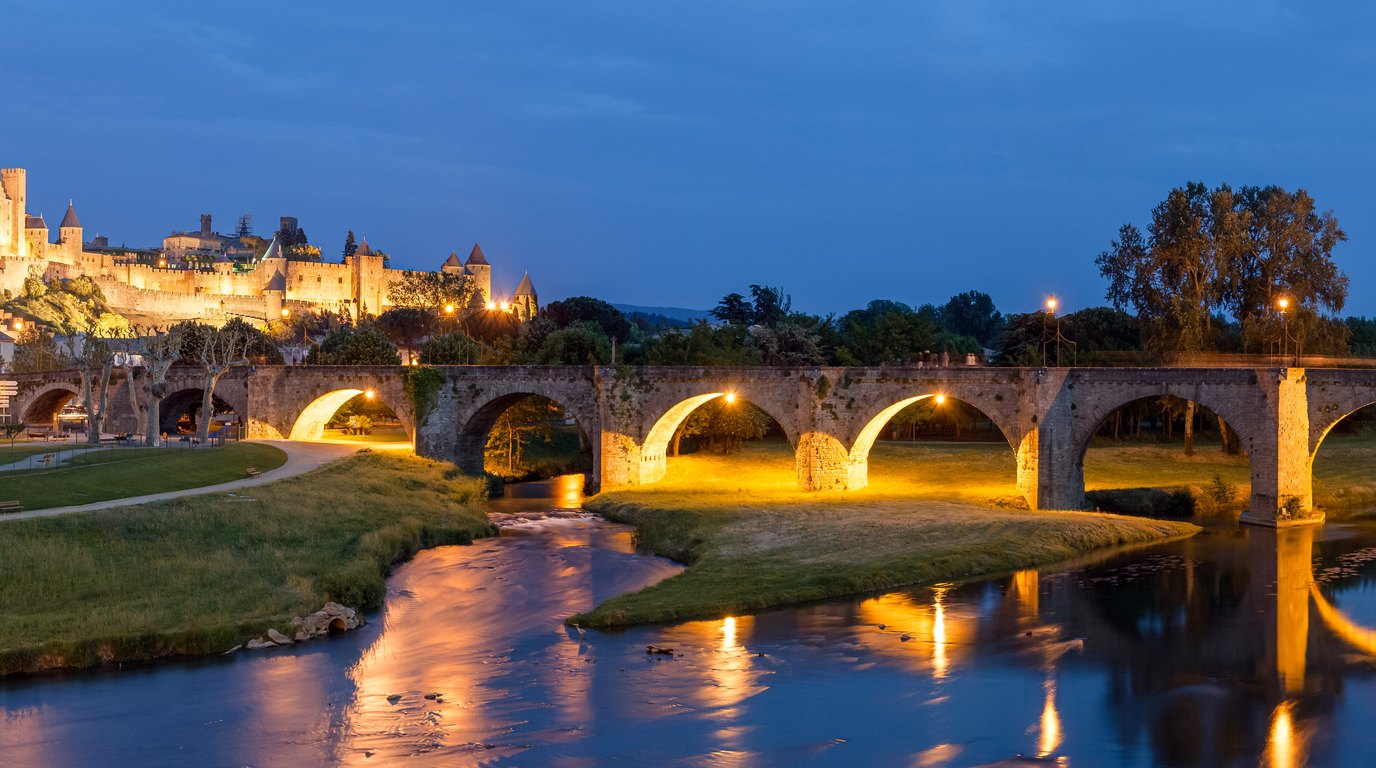
Catalonia, Andorra and the eastern Pyrenees
One route links the ramparts of Carcassonne, the mountain passes of Andorra, Gaudí's Barcelona and wild Cap de Creus on the Costa Brava. In two weeks you move from a medieval walled town to a principality hidden among 2,000-metre peaks, a Benedictine abbey clinging to a conglomerate ridge and a coast where the Pyrenees tumble into the sea. The hops between stops are short and the network of campsites is dense, so you spend most of your time in place rather than behind the wheel. The season runs from May to October; only the high Tristaina lakes tend to be free of snow from late June onwards.
Itinerary
From Prague to the Rhine
Set off early in the morning through Rozvadov and the Bavarian motorways heading west. The first day is pure transit, so save your strength and plan longer breaks rather than a record average speed. For the night, Alsace or the Baden side of the Rhine are the obvious choices; motorhome pitches are plentiful there even in high season.
South through France into the Auvergne
The second day runs through Burgundy into the Auvergne, where the A75 motorway starts at Clermont-Ferrand — it crosses the Massif Central and avoids the crowded Rhône valley. This is the longest leg of the whole trip, so do not stretch it: stay the night up on the plateau around Saint-Flour and leave the descent south, viaduct included, for the morning when the road is quiet.
Over the Millau Viaduct to Carcassonne
The morning takes you across the Millau Viaduct, which you drive as a matter of course and with no detour, and from there the road drops towards the foot of the Pyrenees. By the afternoon you can be standing beneath the ramparts. The Cité is at its best in late afternoon, once the crowds have gone and the stone turns honey-coloured. For a first taste, a circuit of the outer ring of walls and dinner in the lower town, Bastide Saint-Louis, is enough.
Cité de Carcassonne
The fortified town has a double ring of walls with fifty-two towers and has been on the UNESCO list since 1997. Wandering the lanes is free; you pay to enter the Château Comtal and to walk the wall ramparts — and that one is worth the money. The look of the Cité was largely determined by the restoration led in the 19th century by the architect Eugène Viollet-le-Duc. In the afternoon it is worth stretching your legs along the Canal du Midi.
Over the Port d'Envalira into Andorra
The route runs through the Ariège department and the spa town of Ax-les-Thermes, from where the road climbs to the border at Pas de la Casa. You can go over the old Port d'Envalira pass at 2,408 metres, or through the tunnel beneath it — in fog and rain the tunnel is the more sensible option with a motorhome. On the way down, stop in Canillo at the Roc del Quer viewpoint, where a steel walkway juts out over the valley. End the day in Andorra la Vella at Casa de la Vall, which was the seat of the principality's General Council until 2011.
Ordino-Arcalís and the Tristaina lakes
Andorra's northernmost valley ends at the Ordino-Arcalís resort, the starting point for the walk to the three glacial Tristaina lakes at around 2,300 metres. A reasonably fit walker can do the loop around them in a morning, and the Creussans-Tristaina cable car shortens the climb. The cable car runs roughly from late June to September; earlier in the year expect snowfields right down to the water. In the afternoon it pays to drop down to Ordino, a quieter counterpart to shopping-focused Andorra la Vella.
Down the Segre valley to Montserrat
You leave Andorra in the south through the customs checkpoint beyond Sant Julià de Lòria and carry on past La Seu d'Urgell. The Segre valley gradually opens up, the mountains give way to fields and vineyards, and by the afternoon the jagged silhouette of Montserrat rises on the horizon. You spend the night in Monistrol de Montserrat, directly below the mountain.
Montserrat Monastery
The Benedictine abbey of Santa Maria de Montserrat was founded in 1025 and stands in a saddle of the pink conglomerate massif. Besides the Black Madonna you will find a museum with paintings by Picasso, Dalí and Miró, and the Escolania boys' choir, one of the oldest in Europe. You can ride up on the rack railway or the cable car from the valley, which is a far better option with a motorhome than the hairpins. The highest peak, Sant Jeroni, reaches 1,236 metres and a marked path leads to it from the upper station.
Into Barcelona for Gaudí
The transfer to the coast is short, so by the afternoon you can be standing in front of the Sagrada Família. Tickets are booked for a specific time slot and sell out weeks ahead, so buy them before you leave home. The foundation stone was laid in 1882 and construction is still going on, which shows on the facades: the Nativity side is exuberantly Art Nouveau, the Passion side austere and angular.
Park Güell and the Gothic Quarter
The morning belongs to Park Güell — only the monumental zone with the dragon fountain and the wavy bench on the terrace is paid for, the rest of the park is freely accessible. In the afternoon you can lose yourself in the Gothic Quarter and on Passeig de Gràcia, home to Casa Batlló and La Pedrera. Travel into the centre by public transport and leave the motorhome at the campsite; parking for large vehicles in Barcelona is practically non-existent.
On to the Costa Brava
The coastal leg north runs past Girona and ends in Roses at the northern end of the wide bay. The rest of the day belongs to the beach and an evening walk up to the Renaissance citadel above the harbour. If you like archaeology, you can turn off on the way to the Greco-Roman site of Empúries near L'Escala.
Cadaqués and Cap de Creus
The road to Cadaqués crosses the Perafita pass on a narrow series of hairpins where two large vehicles pass each other only with difficulty, and in season there is minimal space for motorhomes there — so come light, on the local bus from the coast or in a smaller car. The white town drew in Salvador Dalí, who built a house nearby in Portlligat, and just beyond it the mainland ends at the lighthouse on Cap de Creus, the easternmost point of mainland Spain. The rocks here are shaped by the tramontana, the north wind that leans on everything left standing.
Return to Prague
The way back retraces the outward route: along the coast to the French border, north through Narbonne and, on the last day, home through Germany. Split it into three balanced legs so that the final one does not end after dark. If you want to vary the journey, you can return through the Rhône valley and stop at the Roman aqueduct of Pont du Gard.
Practical motorhome information
Up to 3.5 t: Germany charges no toll for a motorhome, while in France you pay according to the vehicle class — a motorhome up to 3.5 t with a height between two and three metres falls into class 2 under the ASFA classification, and a vehicle taller than three metres already falls into class 3 with a noticeably higher rate. Over 3.5 t: in Germany motorhomes are exempt from the heavy goods vehicle toll regardless of weight, because they do not carry freight — only vehicles that cannot be recognised as motorhomes from the outside need to register with Toll Collect. In France a vehicle over 3.5 t automatically goes into class 3, or class 4 with three or more axles. In Spain most motorways are toll-free today; the Catalan concessions remain chargeable — on this route that mainly means the Cadí tunnel on the C-16 road, if you were to head back into the mountains through the Cerdanya. The Millau Viaduct on the A75 has a toll of its own (for a car it is around twelve euros, higher classes pay more). Andorra has no vignette, but the Envalira tunnel is chargeable — the rate depends on the vehicle category and for a car it comes to a few euros per crossing; the old Port d'Envalira pass is free. To enter the ZBE Rondes de Barcelona low-emission zone, a foreign vehicle has to be registered in advance in the AMB metropolitan register, otherwise you risk a fine.
Camping de la Cité, Carcassonne — below the walls of the Cité; the campsite's season runs roughly from mid-March to the end of October, while the dedicated motorhome area is open all year round · Càmping Valira, Andorra la Vella — right in the capital, within walking distance of Casa de la Vall · Xixerella Park, La Massana (Andorra) — pitches in the valley below Pal, a good base for the drive up to Ordino-Arcalís · Àrea d'autocaravanes Parc de l'Alvèrnia, Monistrol de Montserrat — a municipal area by the C-55 road below Montserrat · Camping 3 Estrellas Barcelona, Gavà — by the sea south of Barcelona, on the C-31 road towards the airport · Càmping Salatà, Roses — in the bay of Roses, a short way from the harbour · Càmping Port de la Selva, El Port de la Selva — on the northern side of the Cap de Creus peninsula
The area in Monistrol de Montserrat is intended for an overnight stop, not for camping: leave the awning rolled up, the table and chairs belong only in the designated picnic corner, and you may stay no more than two days. In the Cap de Creus nature park, spending the night outside a campsite is prohibited, so plan the night before your trip to the cape in Roses or in El Port de la Selva.
The municipal area in Parc de l'Alvèrnia in Monistrol de Montserrat has drinking water as well as a waste water dump point — it is the best place to fill the tanks before two city days in Barcelona. In Carcassonne, the year-round motorhome area by Camping de la Cité does the job. In Andorra, handle servicing straight at the campsite; Càmping Valira lies right in Andorra la Vella, so it can be combined with a walk around the city.
Stops along the route
You may also like
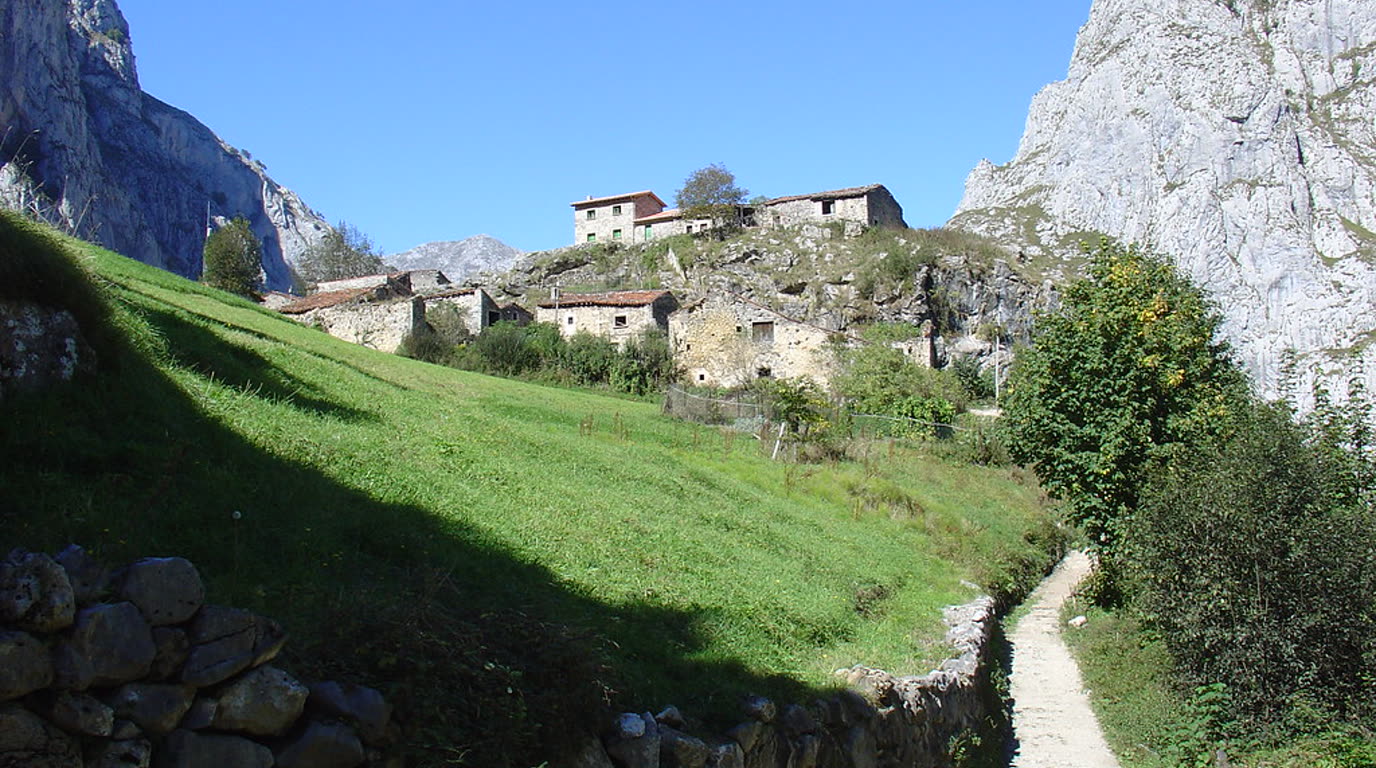
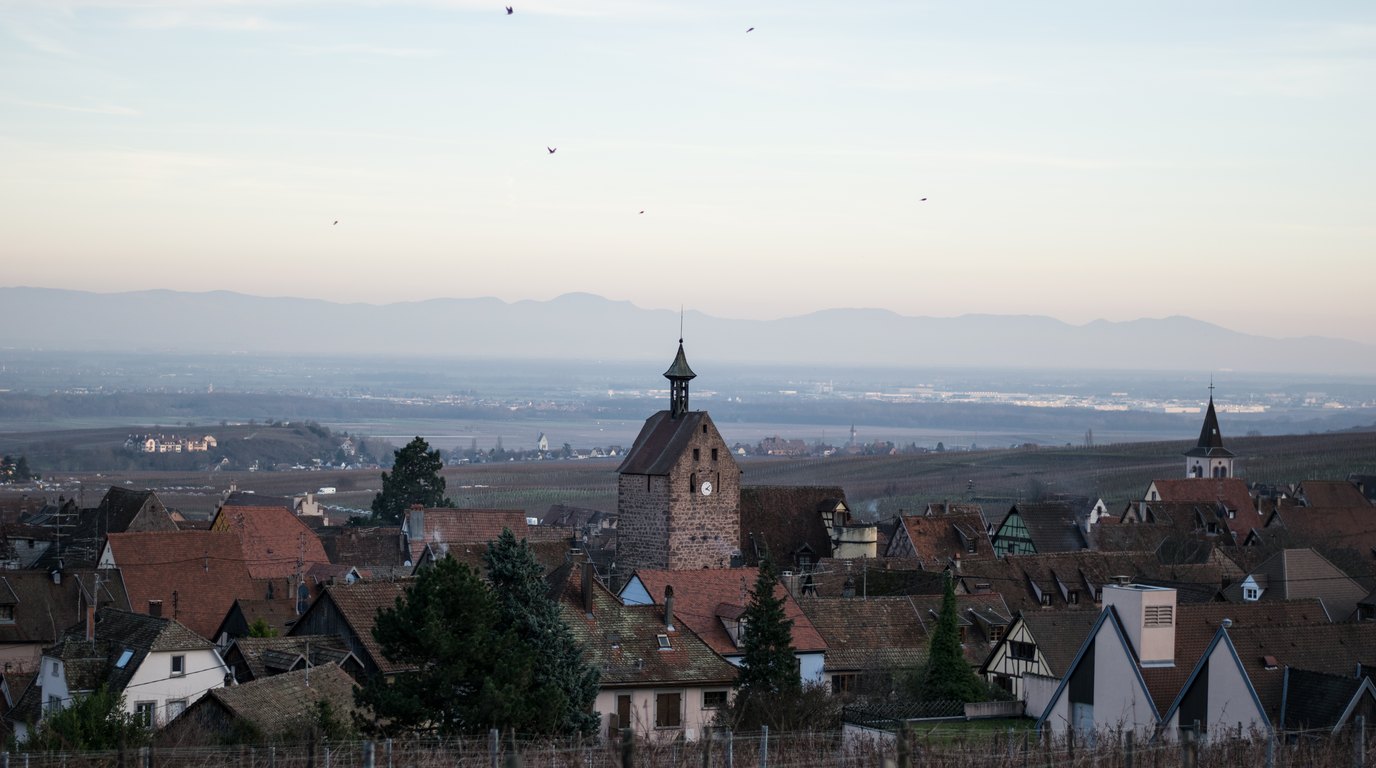
The map and GPX contain separate planning waypoints, not a driving route. Follow the itinerary for access to attractions and campsites.
Adria Compact
The Adria Compact is a low-profile motorhome that has stayed slim: the body is 2.12 metres wide, which you notice at every passing place on the hairpins to Cadaqués and on the narrow Andorran roads up to Ordino-Arcalís. At 2.75 metres it keeps below three metres in height, and as long as you stay under 3.5 t you pay the cheaper class 2 on French motorways.
Get road trip ideas by email
Leave us your email and we will send motorhome inspiration and stock updates.
Adria Karavany · https://www.adriakaravany.cz/en/vylety/katalansko-andorra-vychodni-pyreneje/