
Sweden – Stockholm, Gotland and the southern coast
Southern Sweden, Gotland and Stockholm in fourteen days: the Österlen coast, Kalmar Castle, the walls of Visby and the Vasa ship. The route starts with a ferry across the Baltic Sea, continues along the coast of Skåne and Blekinge, crosses the Öland Bridge to an island of windmills and from there goes back on board, this time to Gotland. The finale belongs to Stockholm, which works surprisingly well from a motorhome — the vehicle stays at a campsite on the outskirts and the metro takes you into the centre. You return through the Swedish interior to the south coast and board the night ferry back to the continent.
Itinerary
Driving to the Polish Baltic coast
You cross Poland towards the Baltic coast and spend the first night near Świnoujście, where the ferries to Sweden depart. It is a full day behind the wheel, but on fast roads and with scenery that turns into pine dunes towards the end. It pays to stock up in the evening — food and diesel are noticeably more expensive in Sweden.
By ferry to Ystad
The crossing of the Baltic Sea drops you right in the port of Ystad, a few minutes' walk from the old town. Ystad is brick Gothic, crooked half-timbered houses and Gråbrödraklostret, one of the best-preserved medieval monasteries in Sweden. That is plenty for a first day in the country: a walk, a coffee with a cinnamon bun and an early night.
Österlen and Ales stenar
The coast east of Ystad is the gentlest corner of Sweden — low hills, rapeseed fields and fishing villages. Above Kåseberga stands Ales stenar, a stone ship of fifty-nine boulders on the ridge over the sea, which archaeologists date to roughly the 6th century. Heading further north you pass Simrishamn with its white cottages and Kivik with its apple orchards, where juice is sold straight from the press.
Along Blekinge to Kalmar
A transfer day, but a pleasant one: the road follows the coast of Blekinge between bays and pine forests. The destination is Kalmar and its Renaissance castle on the water, where the Kalmar Union was concluded in 1397. The courtyard and the halls inside can be seen at a leisurely pace in an afternoon, and the evening light over the sound is worth waiting for.
Öland – windmills, alvar and Borgholm
The Öland Bridge takes you over to a long, flat island that looks unlike the rest of Sweden: limestone plains, dry stone walls and hundreds of wooden windmills. Above the small town of Borgholm rises the massive ruin of a castle that burned down in 1806 and has stood roofless ever since. The northern tip of the island ends in wide sandy beaches where you can easily spend a whole afternoon.
From Oskarshamn to Gotland
In the morning you drive back across the Öland Bridge to Oskarshamn — a good two to three hours from the northern tip of the island, so it makes sense to spend the last night on Öland closer to the bridge, or to pick a later sailing. The Destination Gotland crossing takes roughly three to three and a half hours, and you arrive in Visby from the sea, so you see the ring of walls and towers before you even step out of the vehicle. The rest of the day belongs to the harbour, Almedalen and a first walk inside the walls.
Visby from the inside
Visby is a UNESCO-listed Hanseatic town and you notice it on every corner — ruined churches stand among inhabited houses and the cobbles break into steps. Walk through Domkyrkan, the ruins of St Nicholas and the lanes above the harbour, where roses from front gardens are sold in summer. Families with children will enjoy Kneippbyn with Villa Villekulla, the film house of Pippi Longstocking.
Fårö, sea stacks and the east coast
The northern tip of Gotland is closed off by the island of Fårö, reached by a short ferry from Fårösund. Waiting there are the raukar — limestone stacks carved out by the sea, standing in the shallows like statues. On the way back you can stop in Ljugarn on the east coast, where there is another group of stacks and a long, shallow beach.
Crossing to Nynäshamn and arrival in Stockholm
A second ferry line runs from Visby to Nynäshamn south of Stockholm, so you reach the capital without any detour. From the port it is a short hop to the southern edge of the city, which leaves the afternoon for settling into the campsite. In the evening it pays to buy a public transport ticket for the whole stay — you will be using it three days in a row.
Gamla Stan and the Vasa ship
The metro takes you from the campsite to Gamla Stan and you come out right below the Royal Palace. The old town on the island of Stadsholmen is a tangle of cobbled lanes with ochre and rust-coloured facades, and among them stand the cathedral and the narrowest alley in the city. The afternoon belongs to Djurgården and the Vasa Museum: the seventy-metre warship of 1628 sank on her maiden voyage and is the only almost completely preserved ship of the 17th century.
Drottningholm and Djurgården
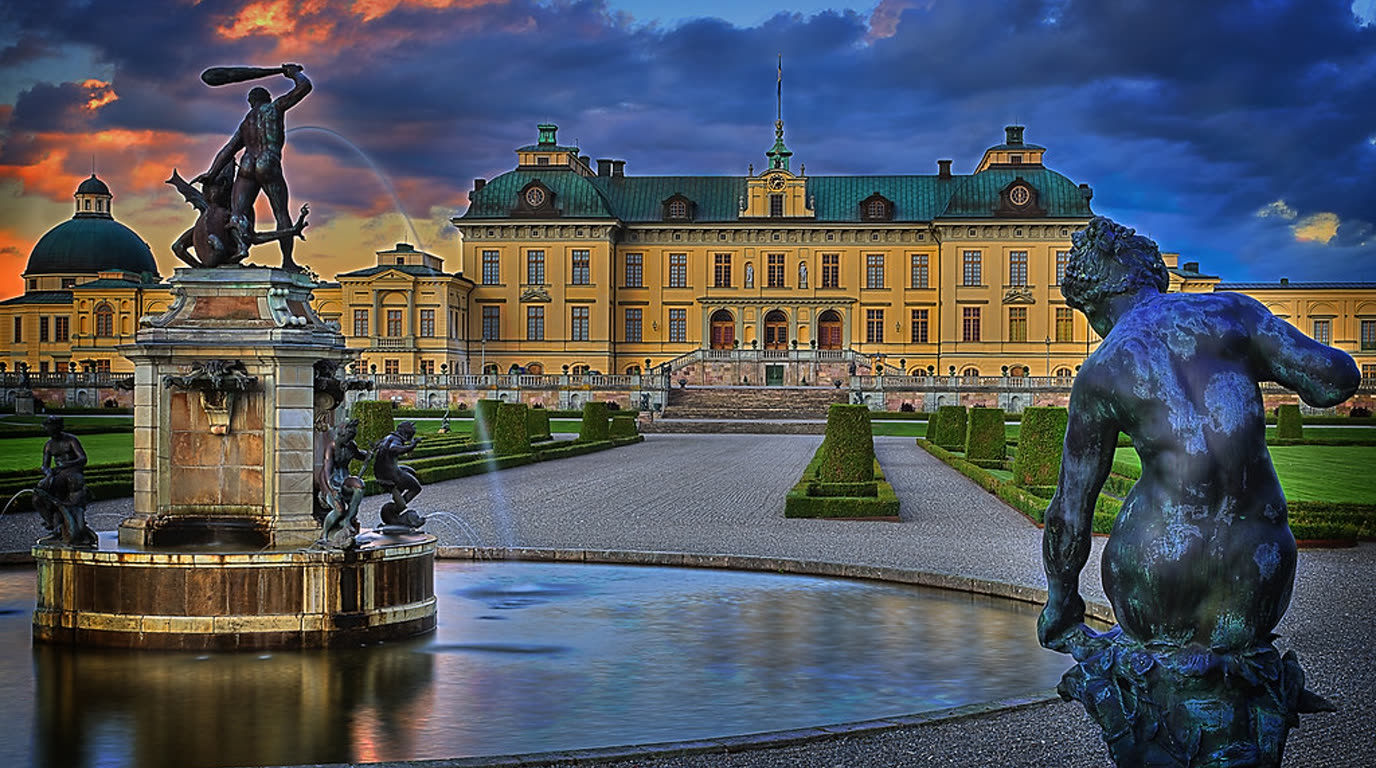
Drottningholm Palace on the island of Lovön is reached from central Stockholm by excursion boat, which is the nicest part of the whole day. The residence of the Swedish royal family is on the UNESCO list mainly for its preserved court theatre and the Chinese pavilion in the park. In the afternoon you return to Djurgården — for the open-air museum, the view from Fjällgatan or simply a coffee by the water.
South through the Småland lake country
The return begins gently: from Stockholm the road leads inland to Lake Vättern, where the small town of Gränna, famous for its striped polkagris candy, lies on the slope above the water. A ferry leaves its harbour for the island of Visingsö, which you can visit even without the vehicle. A night by the lake is a quiet one, and the next day only a comfortable stage to the coast remains.
To the south coast and back on the night ferry
The last Swedish day leads across Småland back into Skåne, to the port you entered the country from. There is time for a final bit of shopping and a walk along the pier before the loading ramp opens. The night crossing of the Baltic Sea drops you back on the Polish coast.
From Poland home
All that remains is the drive from the coast across Poland home, this time without stops and on the motorway. If you set off early you are home in the afternoon, and the rest of the day goes on unloading the vehicle and switching off the fridge. Save the last coffee break for before the border — after that the roads are familiar.
Practical motorhome information
Sweden has no motorway vignettes and no weight-based tolls — vehicles up to 3.5 t as well as those over 3.5 t use the roads free of charge. Only individual bridges are charged: an infrastructure charge applies in Motala, in Sundsvall and, since 2023, on the Skurubron near Stockholm, but it amounts to a few crowns per crossing. Stockholm additionally levies a congestion tax (trängselskatt) for every passage through a toll gate on weekdays; it applies to both weight categories and foreign vehicles are no longer exempt from it — the invoice arrives through the Epass24 service, and nothing is charged at weekends, on public holidays or throughout July. The biggest item in the budget, though, is the ferries, and both are charged by vehicle length. The Baltic line from Świnoujście to Ystad (Unity Line, Polferries) works out at roughly 700–1,000 PLN one way, around 170–230 €, for a motorhome with its crew, and a return ticket usually beats two singles. On the ferry to Gotland (Destination Gotland from Oskarshamn or Nynäshamn) the package for a 6–9 m motorhome with passengers starts at about 1,350 SEK one way, roughly 120 €, and July and August are markedly dearer — so count on about double for the round trip. In high season you will also hardly get on board without booking well in advance. If you were to drive to Sweden overland via Denmark, add the toll on the Öresund Bridge, where the rate again follows the length of the vehicle. In Poland the concession sections of the motorways are payable with a vehicle up to 3.5 t as well, and over 3.5 t the e-TOLL system applies. Germany charges motorhomes no toll at all. Check the prices before you set off, as the rates change.
First Camp Stensö–Kalmar (Kalmar) · Böda Sand (Löttorp, northern Öland) · Tobisviks Camping (Simrishamn) · Borrbystrands Camping (Borrby, Österlen) · Visby Strandby (Visby, Gotland) · Ljugarn Semesterby (Ljugarn, Gotland) · Bredäng Camping Stockholm (Skärholmen)
The Swedish allemansrätten, the right to roam the countryside, does not extend to motorhomes — spending the night outside a campsite is not automatically permitted and in the south or on Gotland it is simply not expected. The backbone is the network of ställplatser, the dedicated motorhome stopovers: they tend to be cheaper than campsites and you will find them in smaller villages and harbours too. In high season, however, Visby, Oskarshamn and Nynäshamn are full, so secure your place in advance. In Stockholm do not take a large vehicle into the centre — there is practically no parking for it there, and the campsites on the edge of the city have the metro within reach.
You can refill water and empty the cassette at campsites and ställplatser; Swedish campsites have a latrintömning almost without exception and it is often available at larger fuel stations as well. On this route First Camp Stensö–Kalmar, south of the centre of Kalmar, works well as a service stop before you cross over to Öland, and Bredäng Camping Stockholm as the last comfortable place with full service before you head into the capital. Fill the tank before the ferry to Gotland while you are still on the mainland — the island has little groundwater and abstraction restrictions are common there in summer.
Stops along the route
You may also like
The map and GPX contain separate planning waypoints, not a driving route. Follow the itinerary for access to attractions and campsites.
Adria Compact
The Compact is a nimble low-profile motorhome with an unusually narrow body, so it slips through the lanes of Visby and the gateways of Nordic campsites where wider vehicles have to watch their mirrors. In Stockholm you simply leave it at a campsite on the edge of the city and take the metro into the centre. It does not, however, fit the “up to six metres” bracket — book it in the longer, more expensive class on the ferries to Gotland and to Sweden. Inside there are 3+1 berths and storage spread throughout the vehicle, which is plenty for a two-week family trip.
Get road trip ideas by email
Leave us your email and we will send motorhome inspiration and stock updates.
Adria Karavany · https://www.adriakaravany.cz/en/vylety/svedsko-stockholm-gotland-jizni-pobrezi/